
EXPERIENCE
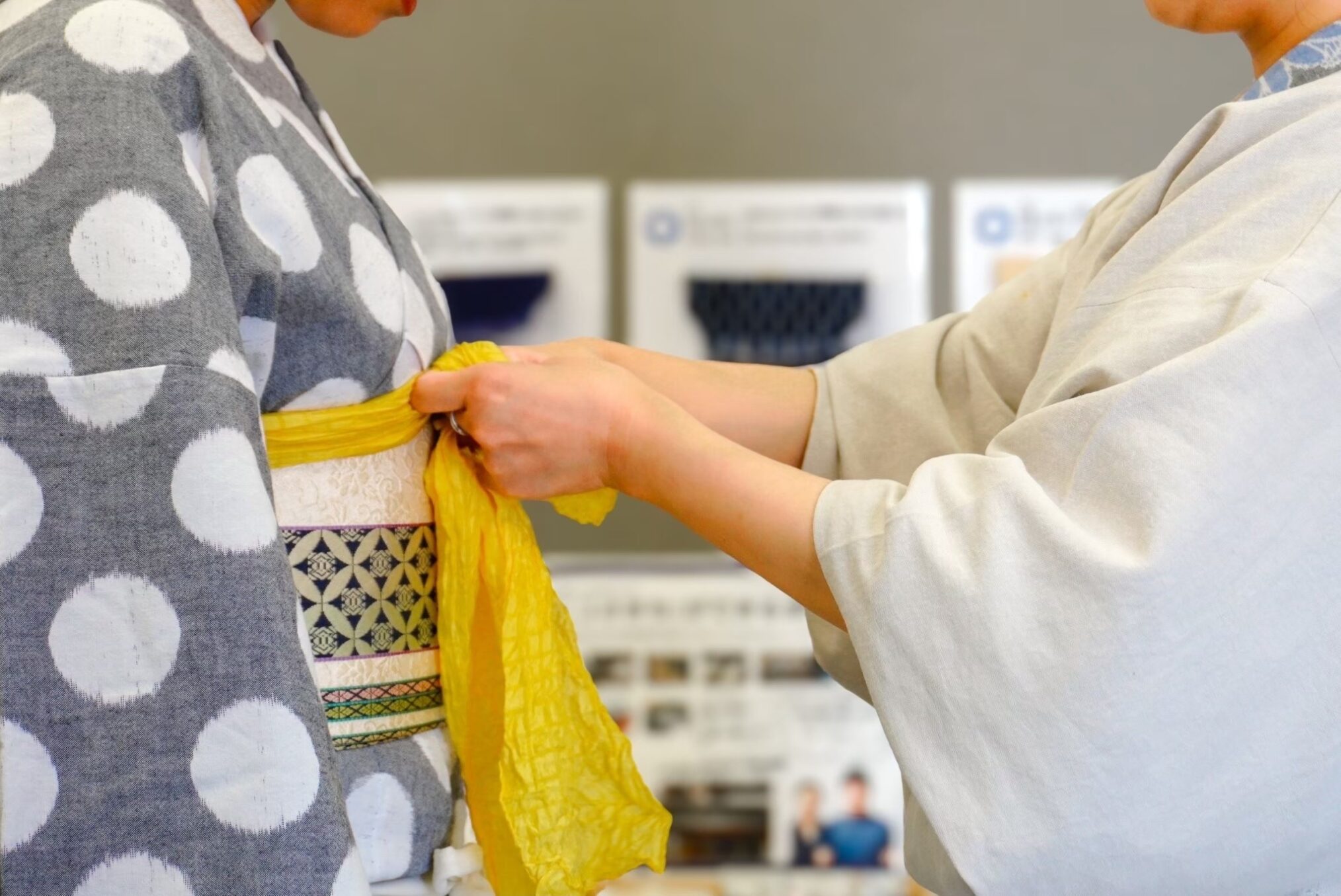
A moment of history and wearing a kimono | Kosai, the birthplace of the automobile and the loom
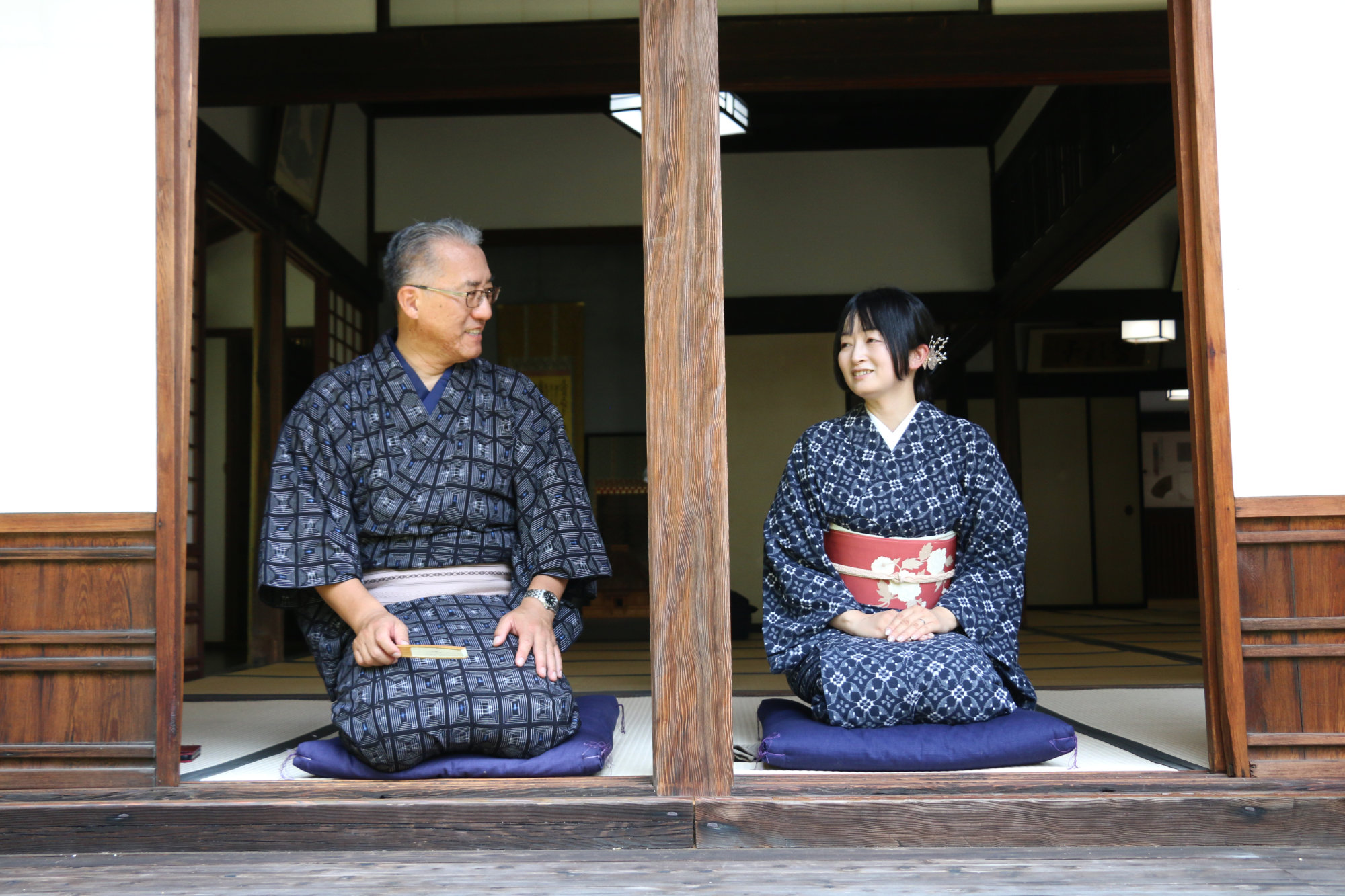
At Nanahou in Kosai City, Shizuoka Prefecture, you can experience a slightly special time wearing a kimono.
The Y-type loom was created in 1915 by an inventor born in Kosai City - you can now wear a kimono woven on this loom.
You will be dressed in a kimono and complete your own unique look while experiencing the history and craftsmanship unique to Kosai.
Kimono reflect the season and your mood with just the right color, pattern, or way of tying the obi, and even your movements can be naturally beautiful.
This is a time to experience the history of looms that have been weaving for over 100 years. Enjoy to your heart's content this special experience that can only be found here.
-
- Season
- October to April
-
- Schedule
- Every Tuesday and Thursday from 10:00 AM (approx. 120 minutes)
-
- of people
- 1 to 4 people *3 women's kimonos and 1 men's kimono are available *Kimonos must be worn by people over 150cm tall
-
- Price
- Basic fee (with kimono rental and dressing): 16,500 yen/person, accompanying person (without kimono rental and dressing): 3,300 yen/person → Currently, with the application of the regional coupon from the tourism campaign, the experience fee is reduced to 15,500 yen/person, accompanying person (without kimono rental and dressing): 3,300 yen/person
-
- in the region
- Explanation of the experience and kimono → Dressing experience → Take a break with local sweets and matcha tea → Go out on your own, or if you wish, take a guided tour of historical spots in Kosai, such as the Toyoda Sakichi Memorial Museum and Honkoji Temple. You can also visit shops listed in the "Kosai Kimono Passport" (food and drink costs are at your own expense) → Return your kimono
-
- Address
- Nanahou Co., Ltd.: 5001 Washizu, Kosai City, Shizuoka Prefecture
-
- Access
- 0 minutes walk from JR Washizu Station, 1 parking space available, or use nearby paid parking (Washizu Station Parking, Washizu Station North Parking)
-
- Contact
- [Contact information regarding the experience] Nanahou Co., Ltd.: 080-6920-8597 (Contact: Osamu)
-
- Other Information
- [Inquiries regarding the reservation system] Hamamatsu Lake Hamana Tourism Bureau: 053-458-0011 (weekdays only, 9:00-18:00)
*On Sundays, holidays and outside of business hours, please fill out the form by clicking [Make a reservation here] → [Inquire about this plan].
◾️Experience content
What is included in the basic fee
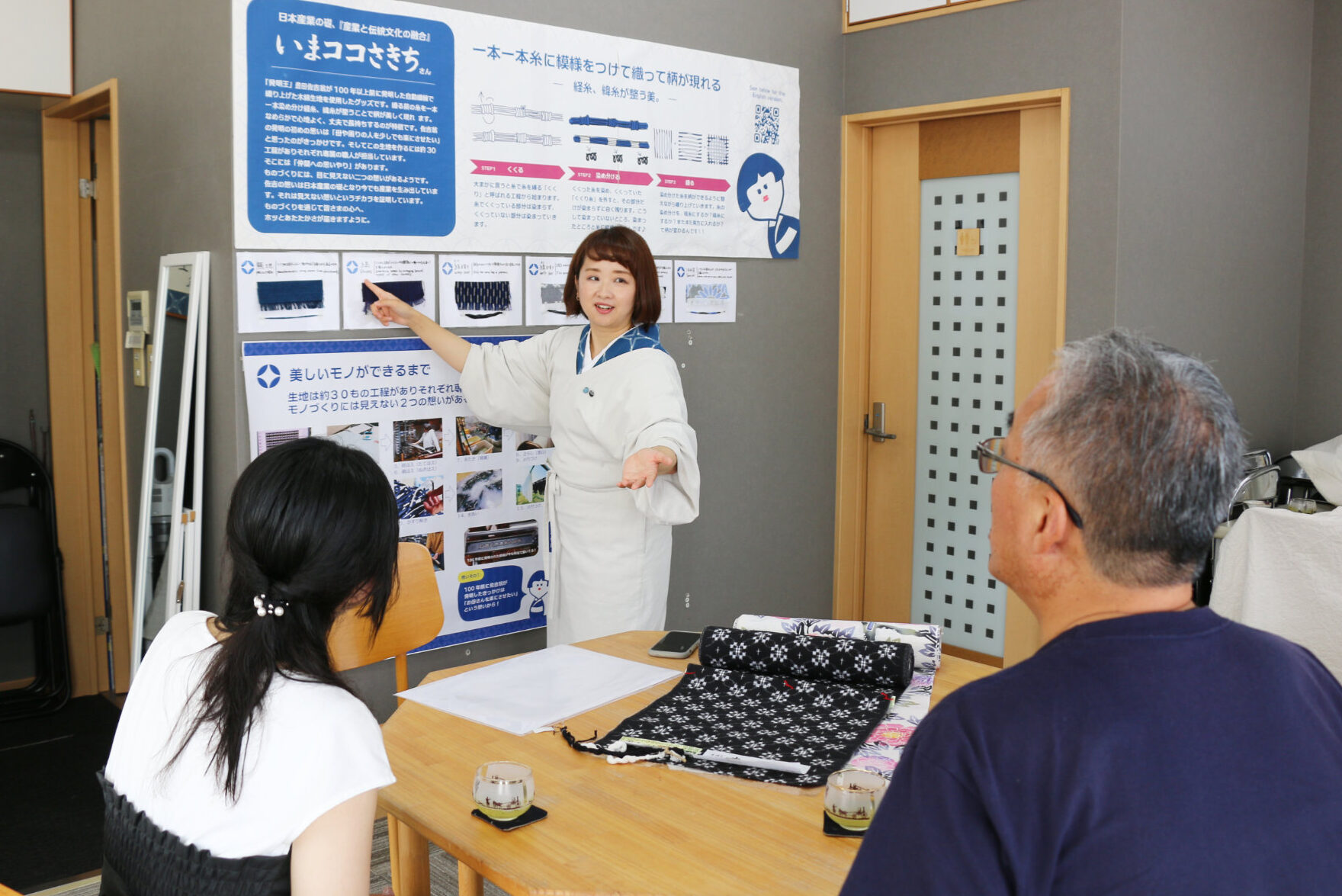
(1) An explanation of the history and culture of kimonos woven on Sakichi Toyoda's Y-type loom
(2) One-day rental of a Kurume Kasuri kimono (returned within business hours on the same day) and dressing
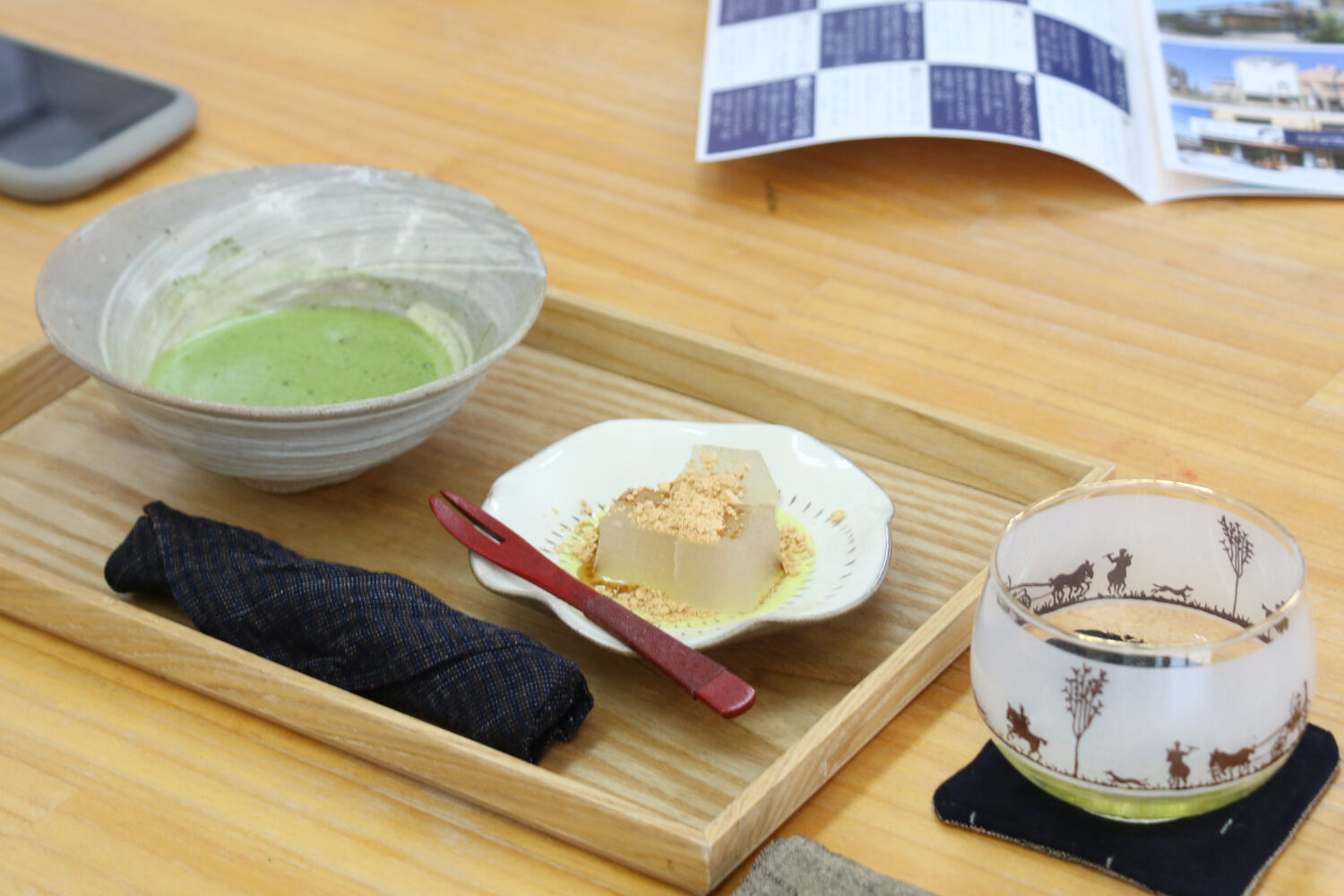
(3) Take a break with local sweets and matcha tea
The following options
◉Tour around historical facilities in Kosai City with a guide (no additional charge)
◉ Guidance to restaurants listed in the "Kosai Kimono Passport" (Participants are responsible for the cost of food and drink)
【Important Notes:】
・Hair styling and photography are not included in the experience. If you would like your hair styled, please do so yourself or have it done in advance.
・If two or more people are planning to try on kimonos, we will provide three kimonos for women and one for men.
・Interpreters will not be provided for the experience.
Kosai City, Shizuoka Prefecture: the birthplace of the loom, the origin of the automobile
Kosai City, Shizuoka Prefecture, is the birthplace of Sakichi Toyoda (1867–1930), the inventor of Japan's first power loom (the Toyoda-style wooden hand loom) and the founder of the Toyota Group.
As a boy, Sakichi saw his mother weaving cloth on a hand loom late into the night without a break, and this inspired him to aspire to invent a power loom.
"Food, clothing, and shelter are all important. We cannot neglect the work of weaving cloth. However, if we continue to work the way we do now, we will surely run into trouble one day. That is why we must further improve our looms."
A self-taught man who continued to innovate, Sakichi invented Japan's first wooden hand-powered loom in 1890, and went on to develop the Toyoda-type narrow-width iron power loom (commonly known as the Y-type loom) in 1915. This technology and spirit became the starting point for manufacturing, and was later used in the Toyota Group's automobile industry.
Even now, more than 100 years later, the Y-type loom is still in use in the Kurume area of Fukuoka Prefecture to produce "Kurume Kasuri" (dyed kasuri), with parts being repaired and maintained over and over again.
We will deliver to you the special experience of wearing a Kurume Kasuri kimono woven on this loom in Kosai, the birthplace of the power loom.
(*Partial quotation:Hamamatsu and Lake Hamana Lovers Net)
A time to encounter kimono on the streets of Kosai
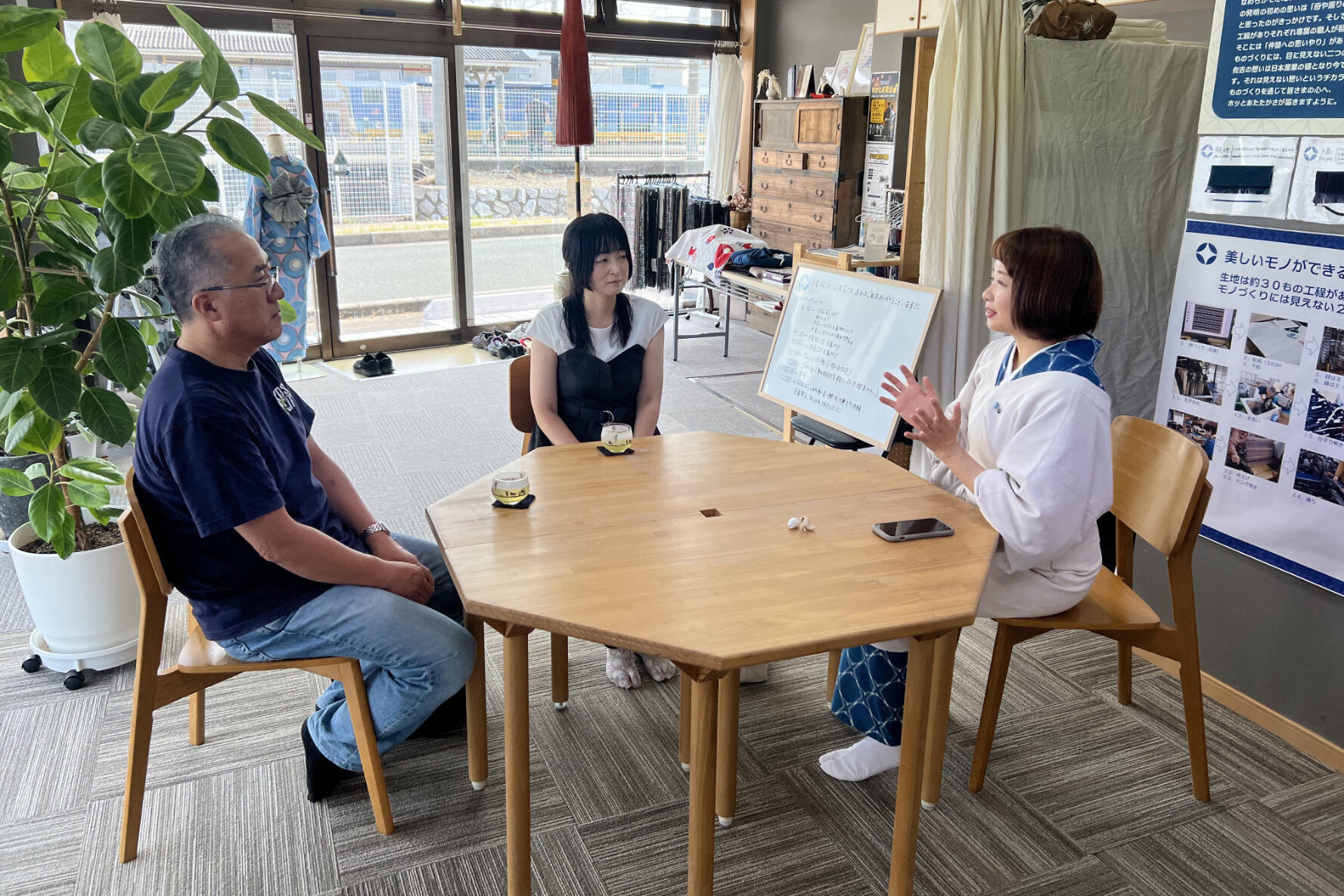
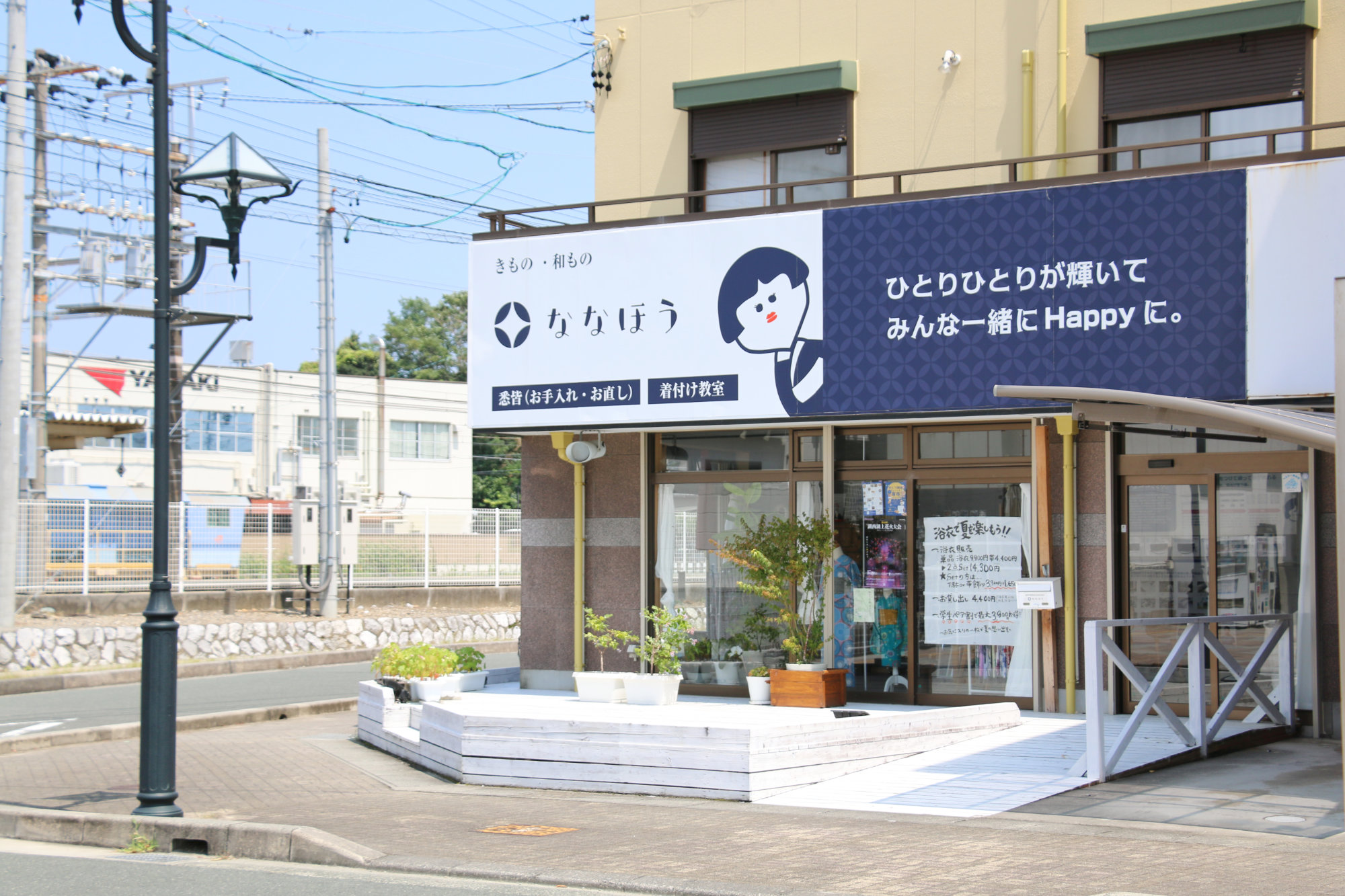
Nanahou is located on a quiet street corner, just a short walk from Washizu Station.
When you get off the station, you'll see a cute sign, and when you open the door, you'll be greeted by the store's owner, Mr. Osakabe, as soft light pours into the store.
This is where you begin your experience of forgetting your everyday life and facing yourself.
Local looms inspired by grandmother's memories
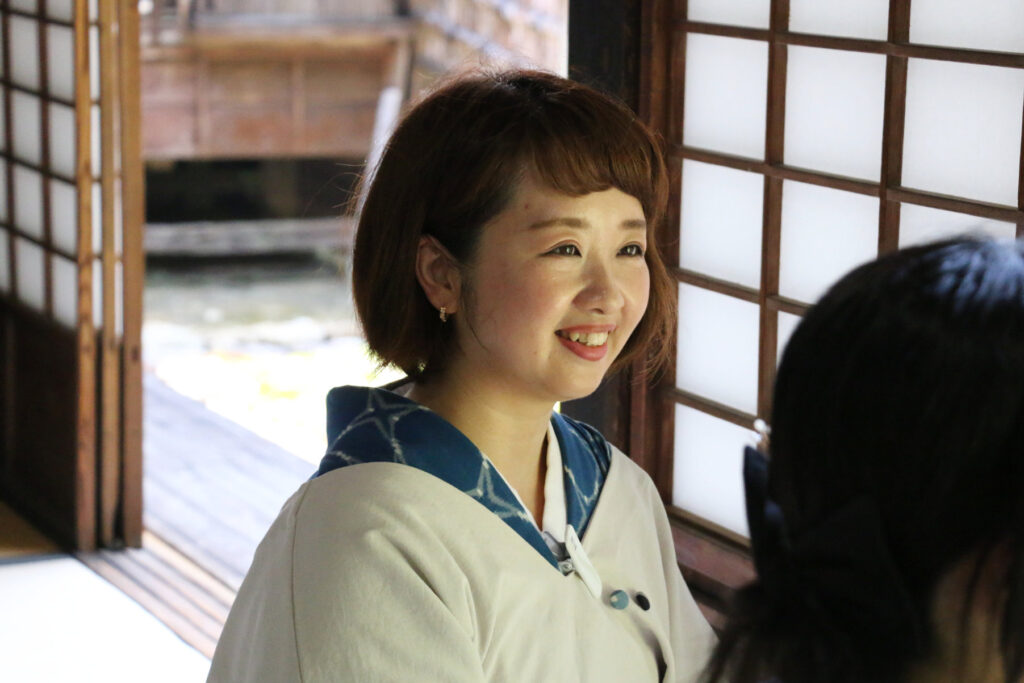
Originally from Kosai City, Ogurabe became interested in the world of kimono after he entered the workforce. He started working at a local automobile manufacturer, where he worked in a shop that attracted many foreigners.
He says that the people he met there had a deep understanding of Japanese history and culture and were able to talk about Japan better than he could.
When I thought about what I could talk about, the first thing that came to mind was the memory of my grandmother dressing me in kimonos as a child. After learning how to wear a kimono, I dressed a friend overseas in a yukata, and the friend's joy in it was greater than I had imagined. This experience made me realize that kimonos have the power to make people happy.
He then gained experience at kimono shops in Hamamatsu and Kurume, and in Kurume he encountered the loom invented by local great Sakichi Toyoda and the "Kurume Kasuri" fabric woven on that loom.
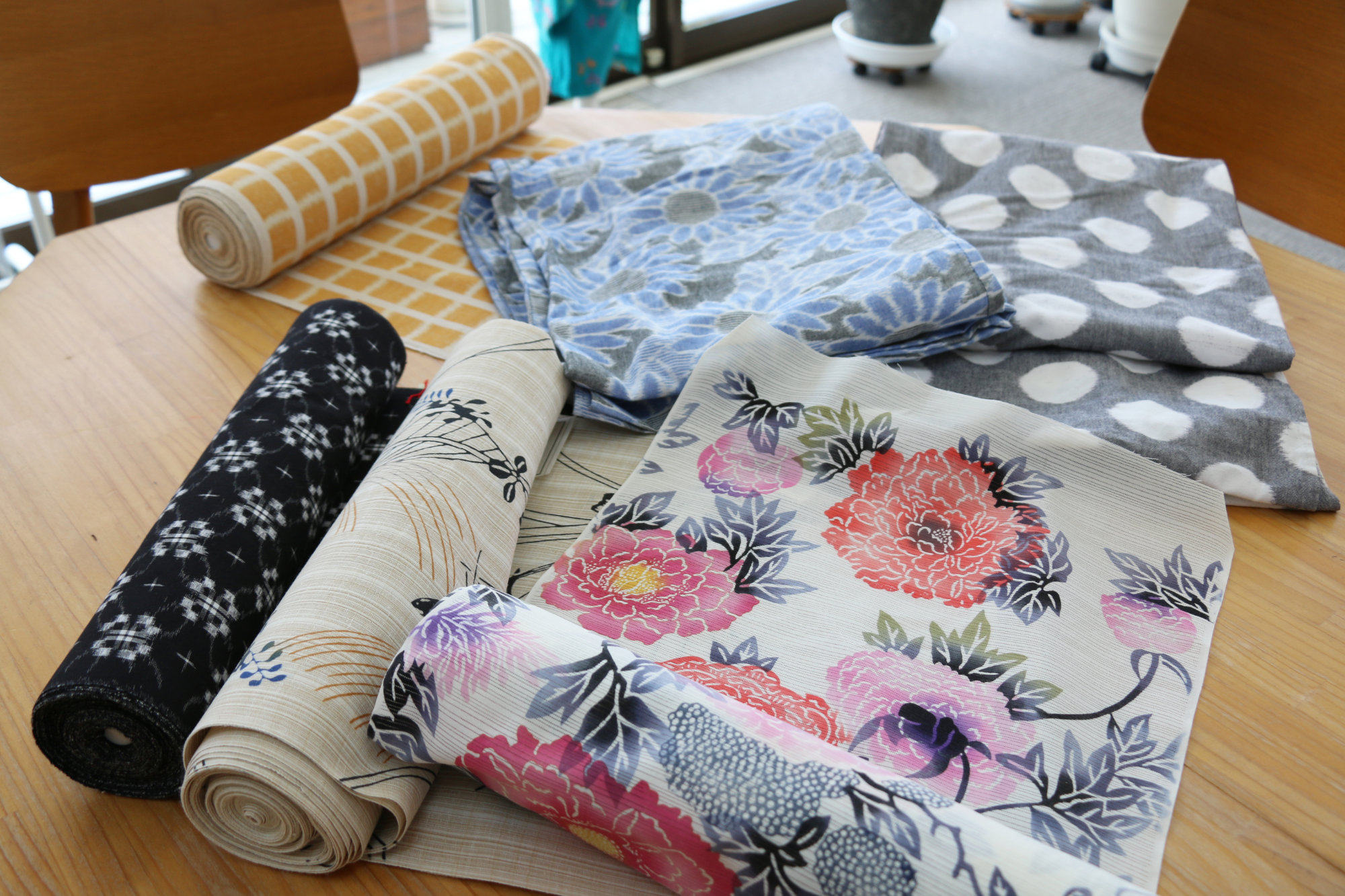
This traditional fabric originated in Fukuoka Prefecture and has a history of over 200 years. It is characterized by the soft, faded patterns that are created by the "yarn-dyeing" technique, in which the threads are dyed before weaving. It is soft to the touch, conforms to the body the more you wear it, and is durable and long-lasting. It combines a subdued texture with a simple beauty, giving it a charm not found in other fabrics.
He was impressed by the fact that local Kosai craftsmanship was being passed down even in faraway places, and he founded Nanahou with the desire to "convey the culture of Kosai with his own hands."
Currently, in addition to offering hands-on kimono dressing sessions at Nanahou, she also helps with dressing for family milestones such as Shichi-Go-San and furisode.
A cup of tea and a relaxing time
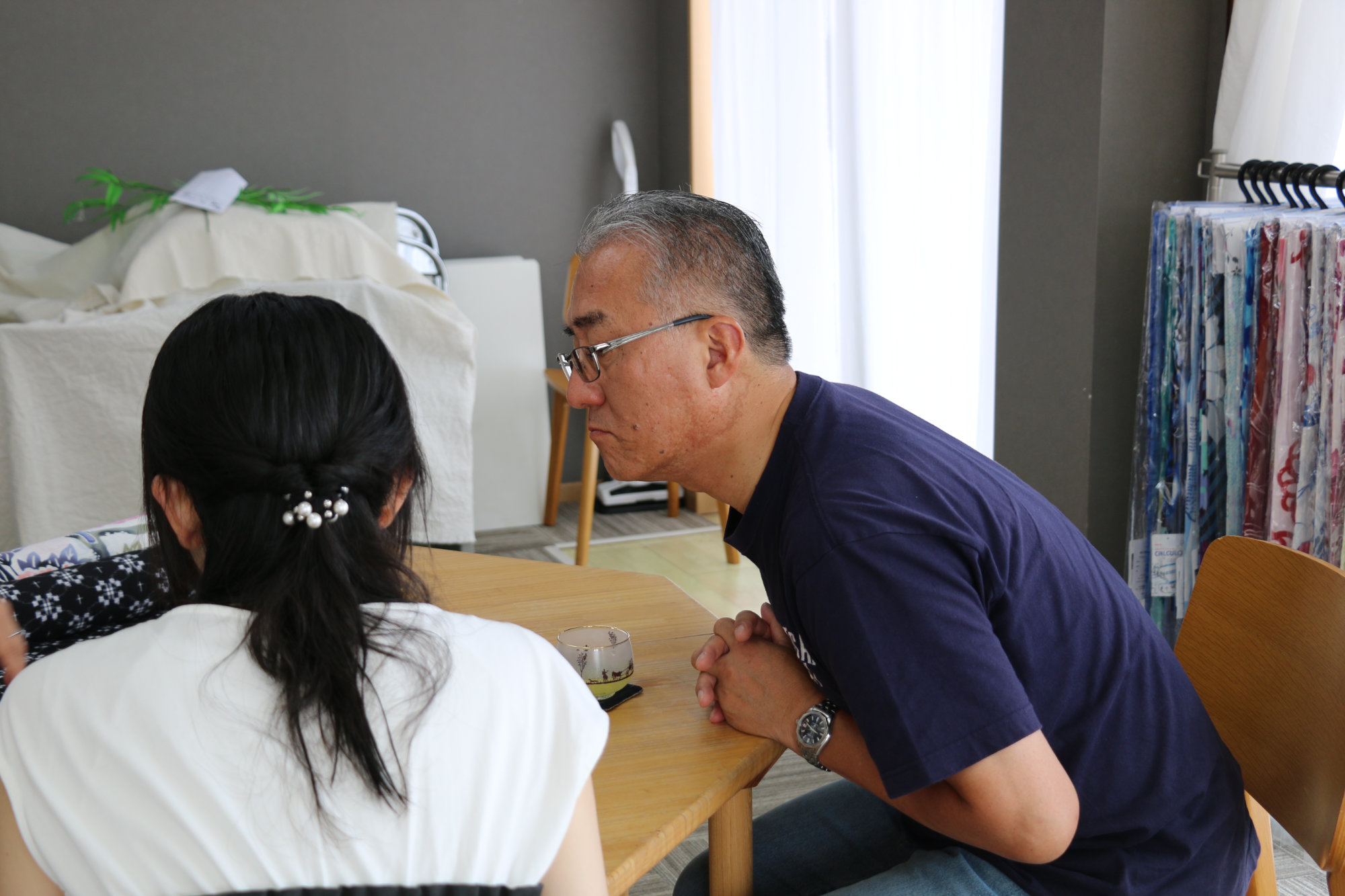
The experience begins with tea being served. While you take a break, you will hear about the schedule for the day and the background of the kimono being woven on the loom.
The aroma of the tea calms the mind and increases anticipation for the special moment that is about to begin.
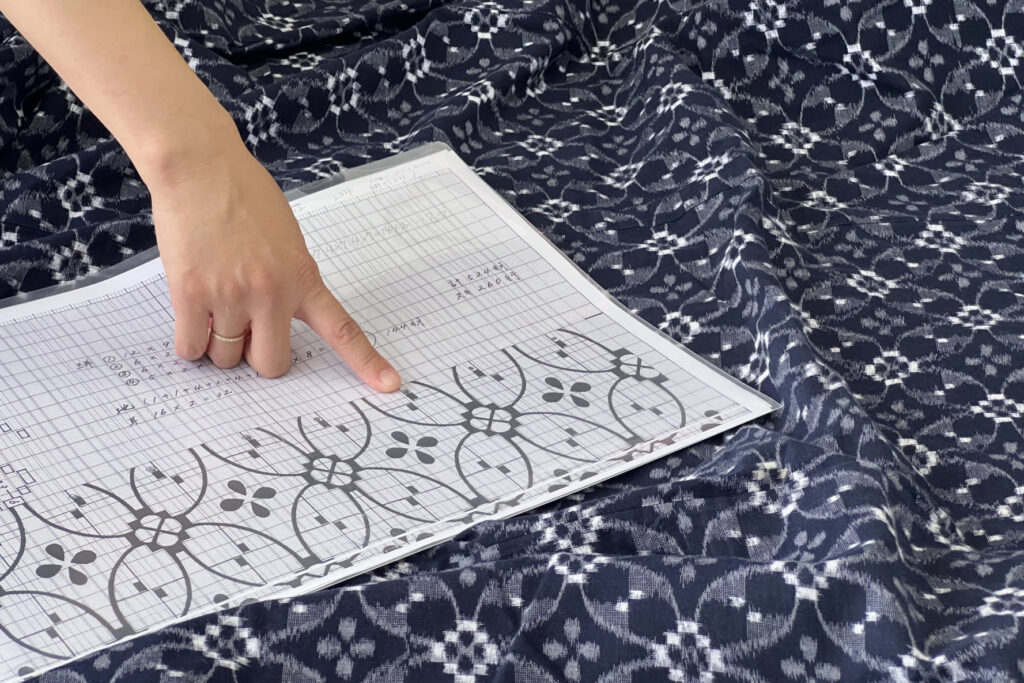
The world of Kurume Kasuri, woven together by handwork and history
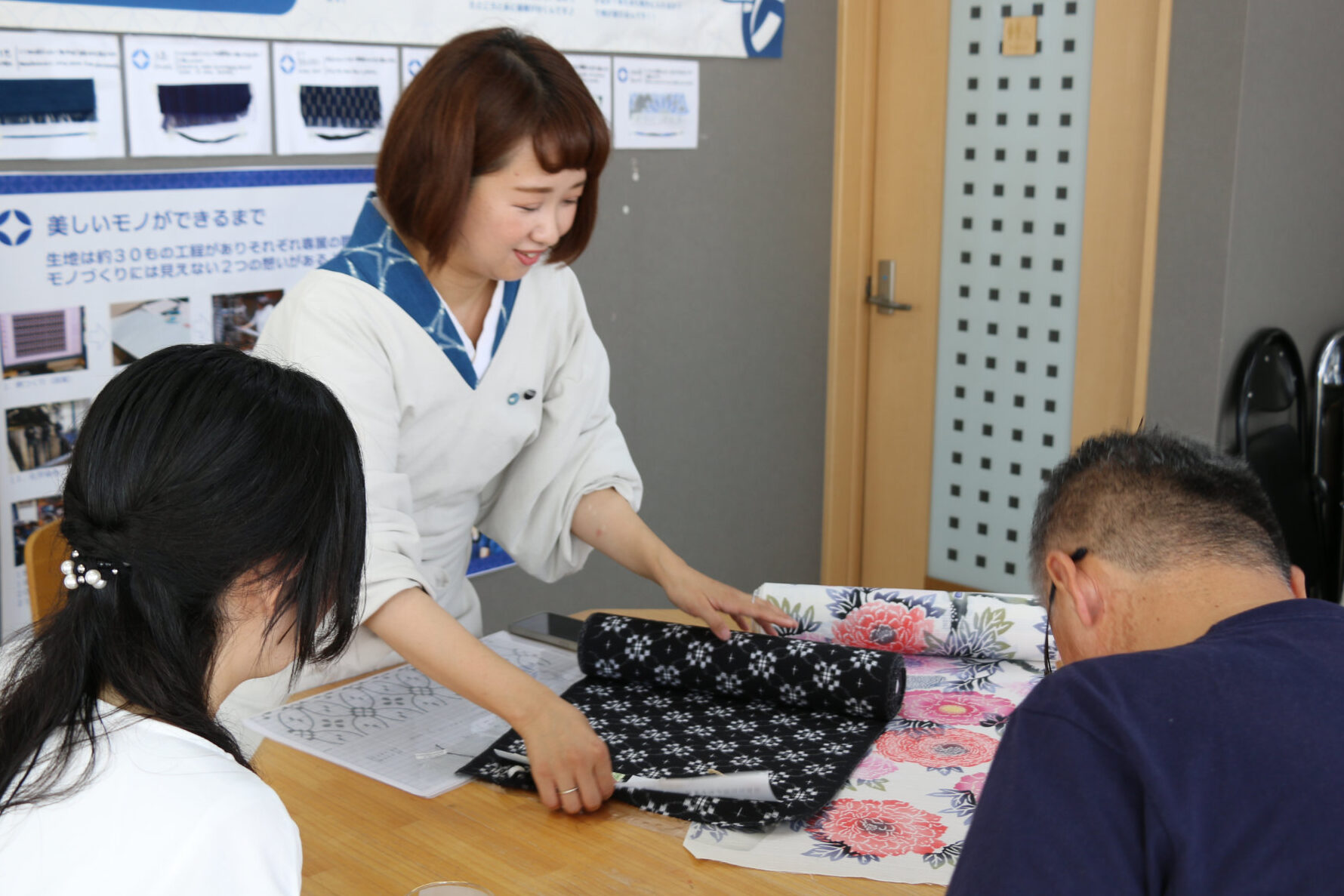
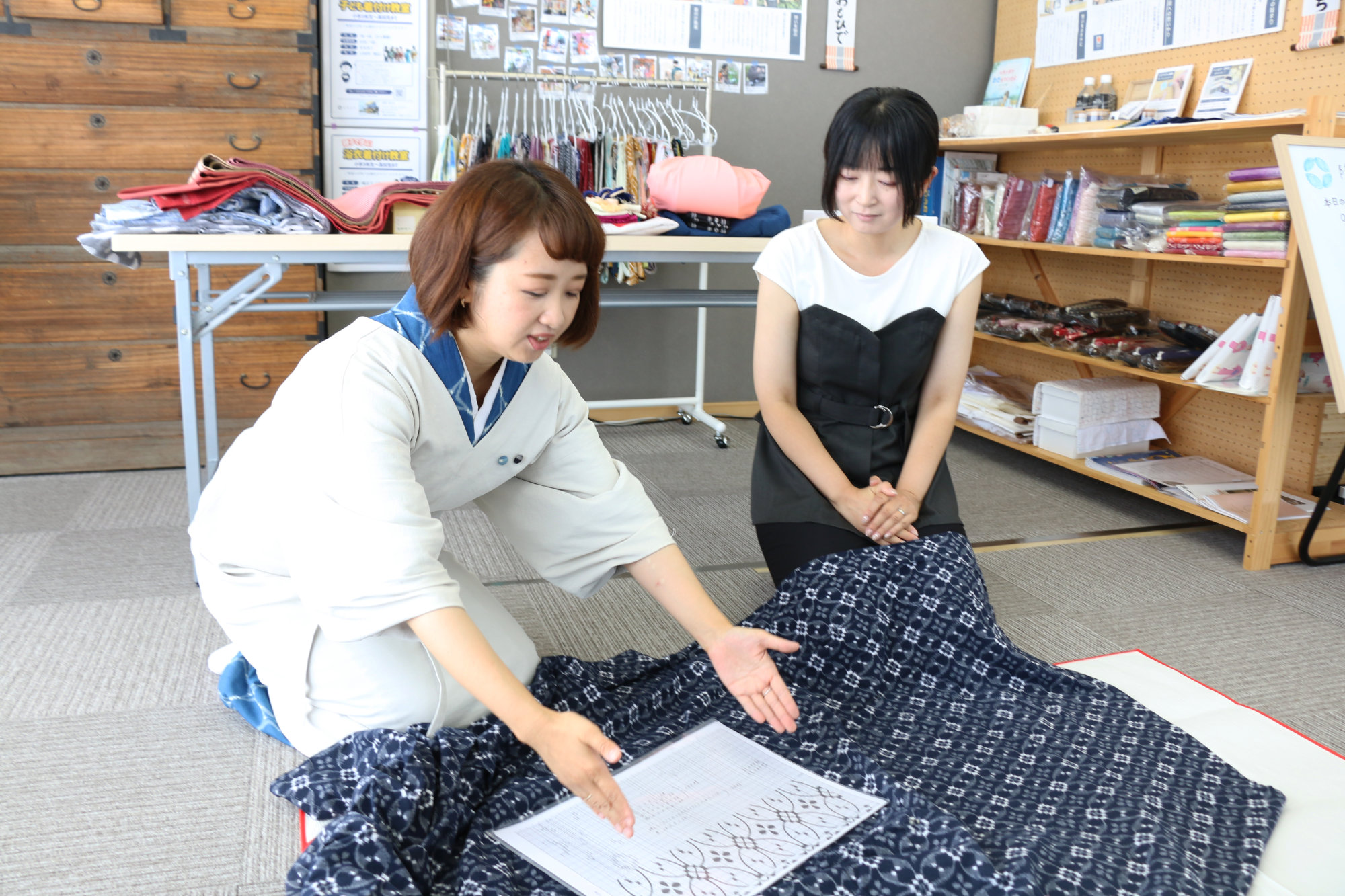
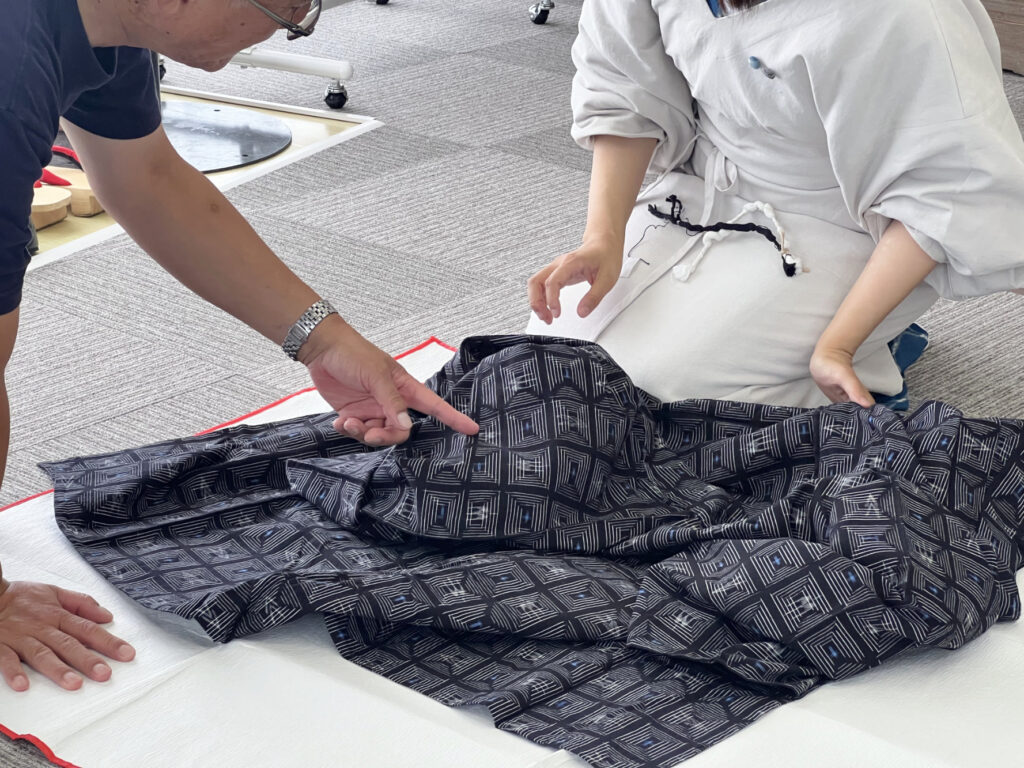
After taking a break with tea, you will enter the world of Kurume Kasuri. The cloth spread out before you has been carefully woven on a loom.
The yarn is dyed differently at the yarn stage, and a unique blurred pattern is created when it is woven.
As you listen to the artisans explain their handiwork and techniques and learn about the history and feelings that go into the fabric, it's as if the simple piece of fabric begins to tell a story.
As you touch it with your fingertips and follow it with your eyes, your heart will naturally be drawn into the depth and beauty of Kurume Kasuri.
Enjoy graceful movements with a kimono
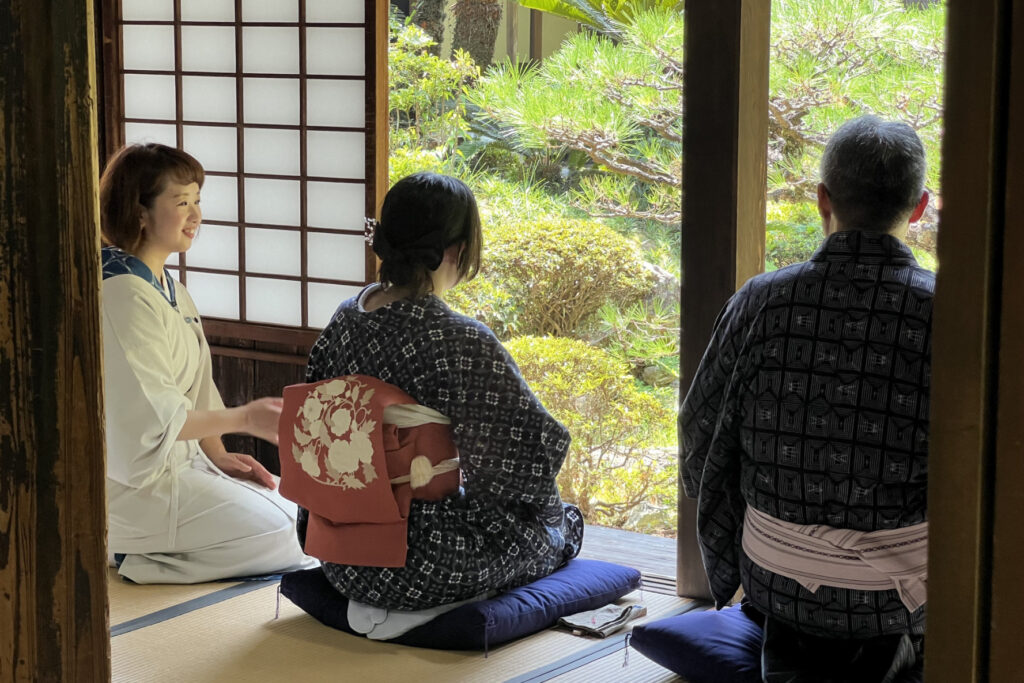
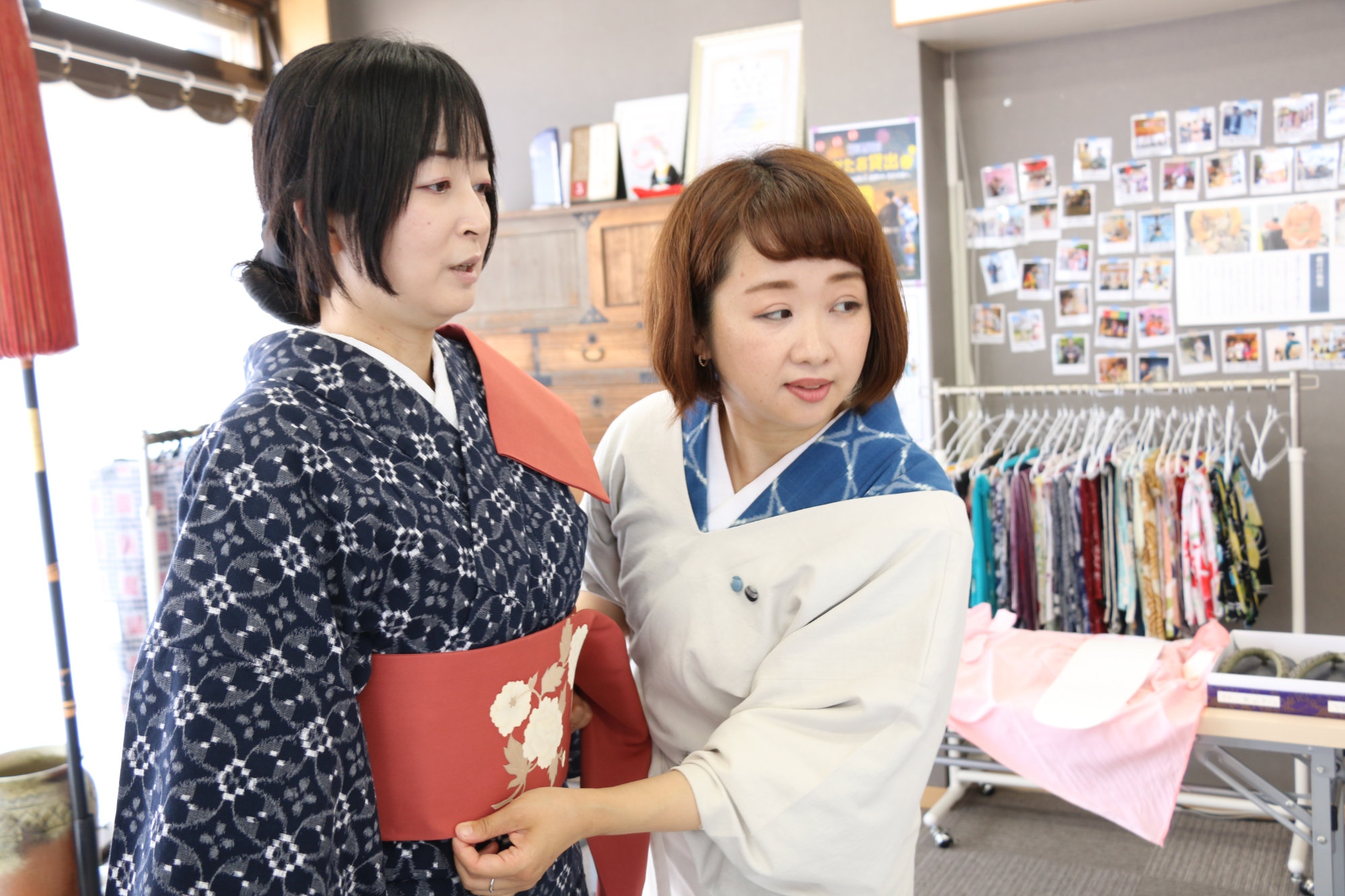
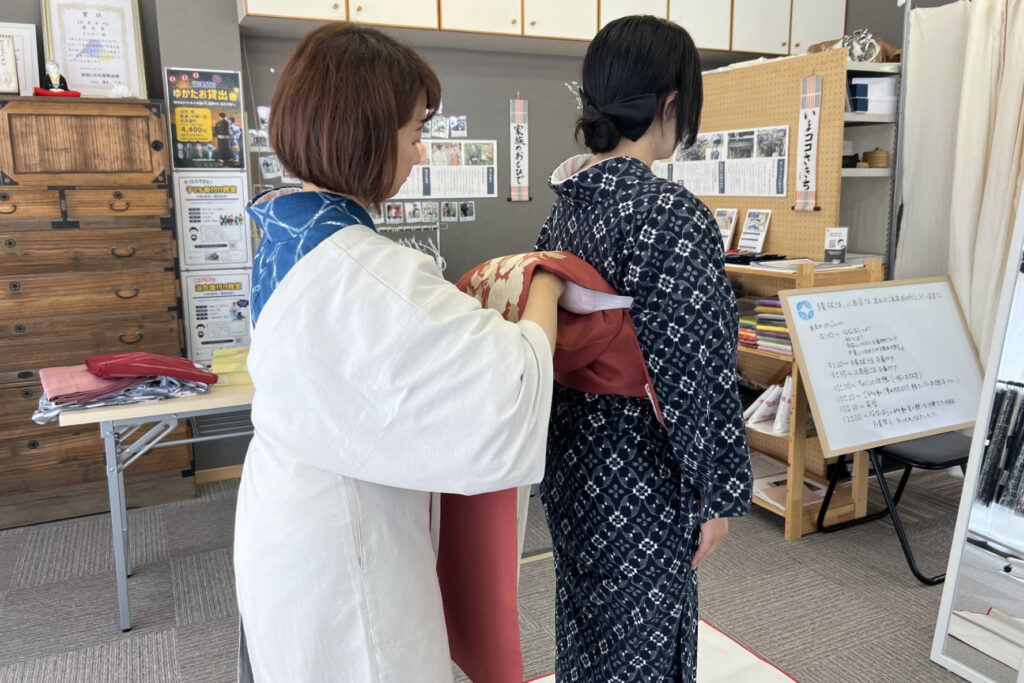
The moment you slip on the kimono, you will feel the light, supple fabric against your skin, and your back will naturally straighten.
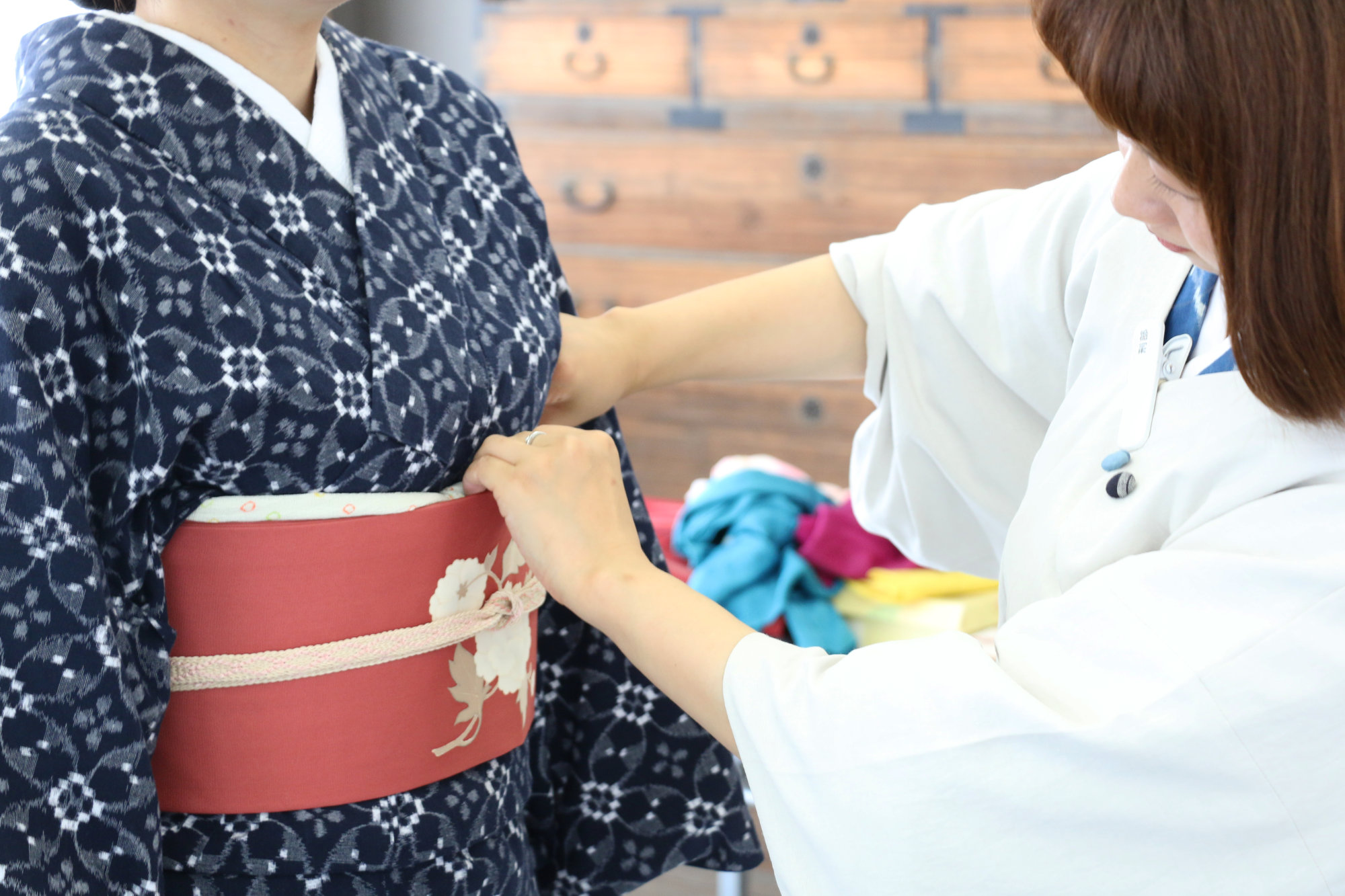
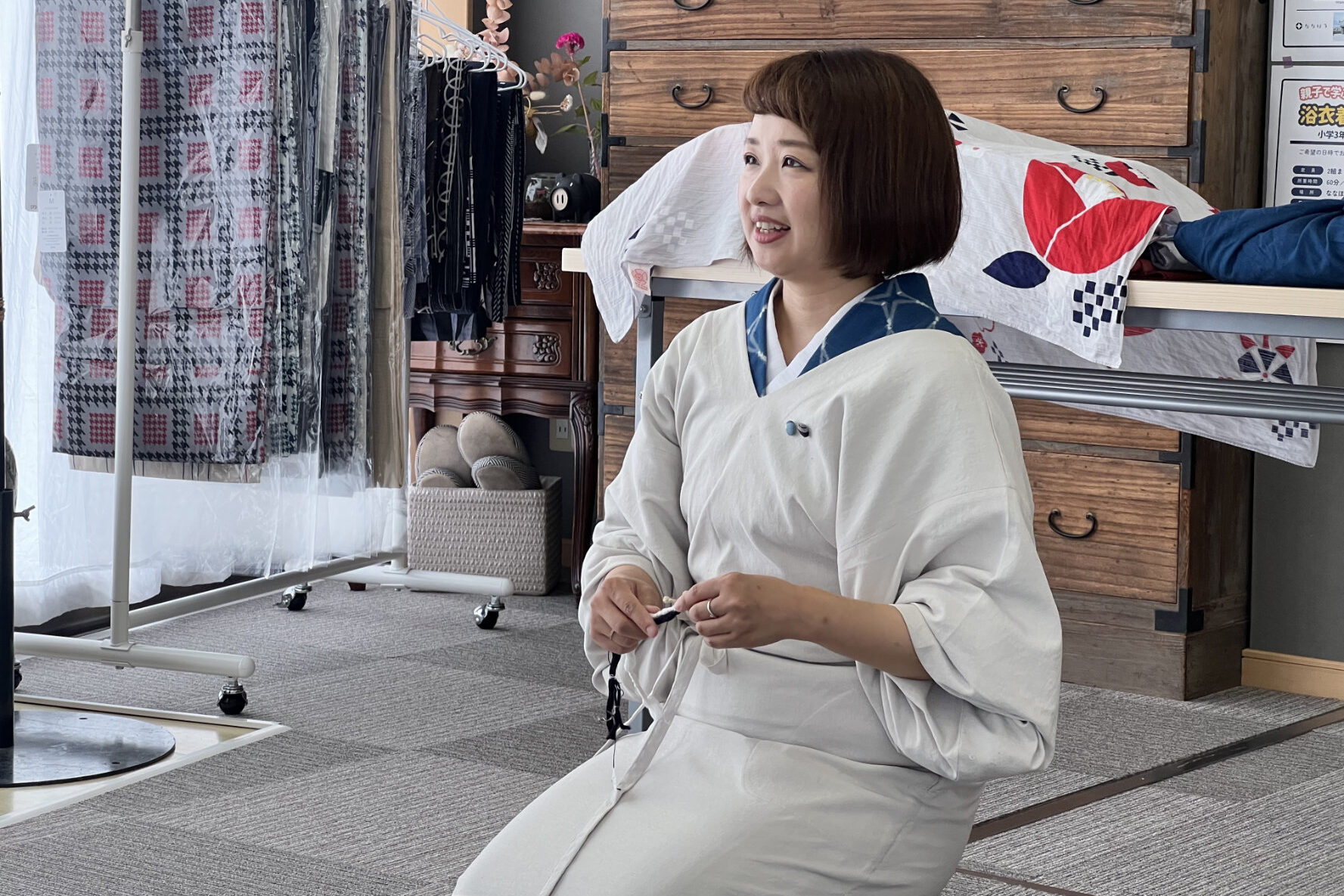
When tying the obi, follow Ogurabe's careful instructions and focus on your movements and breathing.
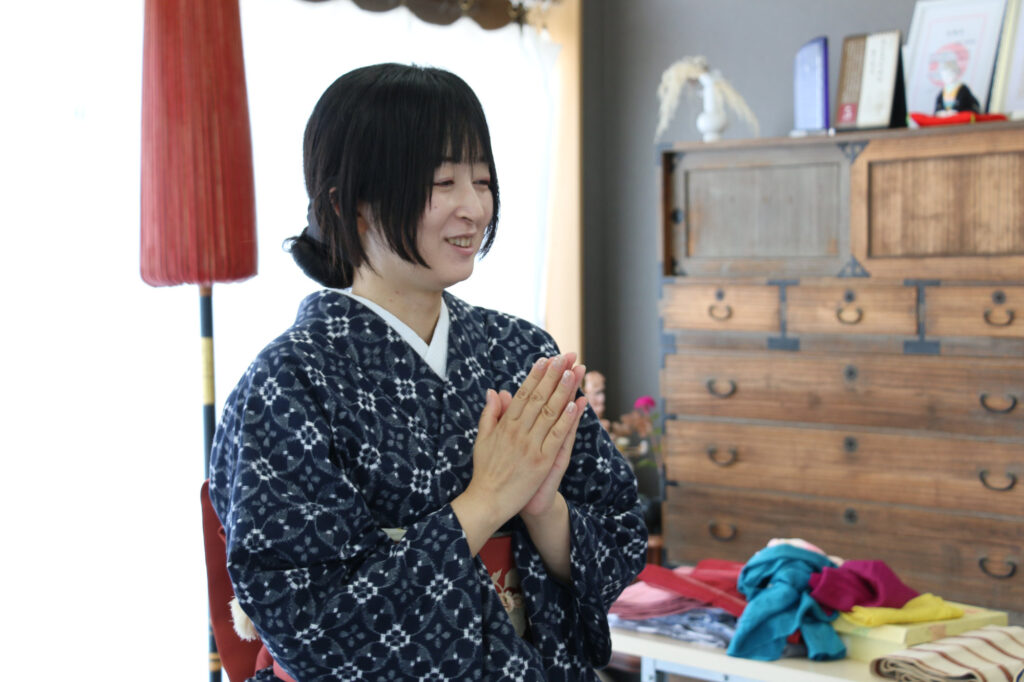
When you complete your outfit with accessories and an obiage, you'll find yourself smiling at your unique look.
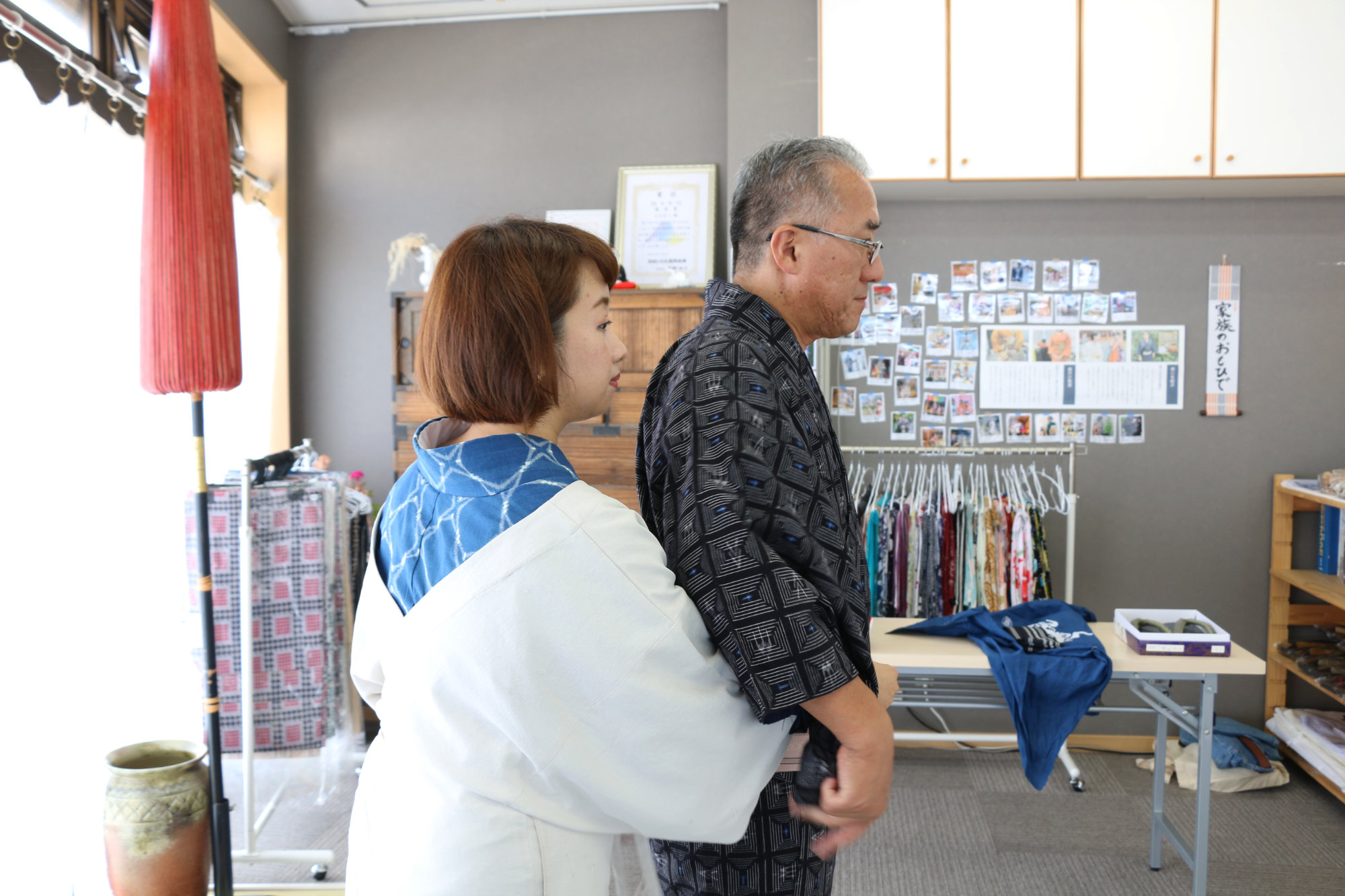
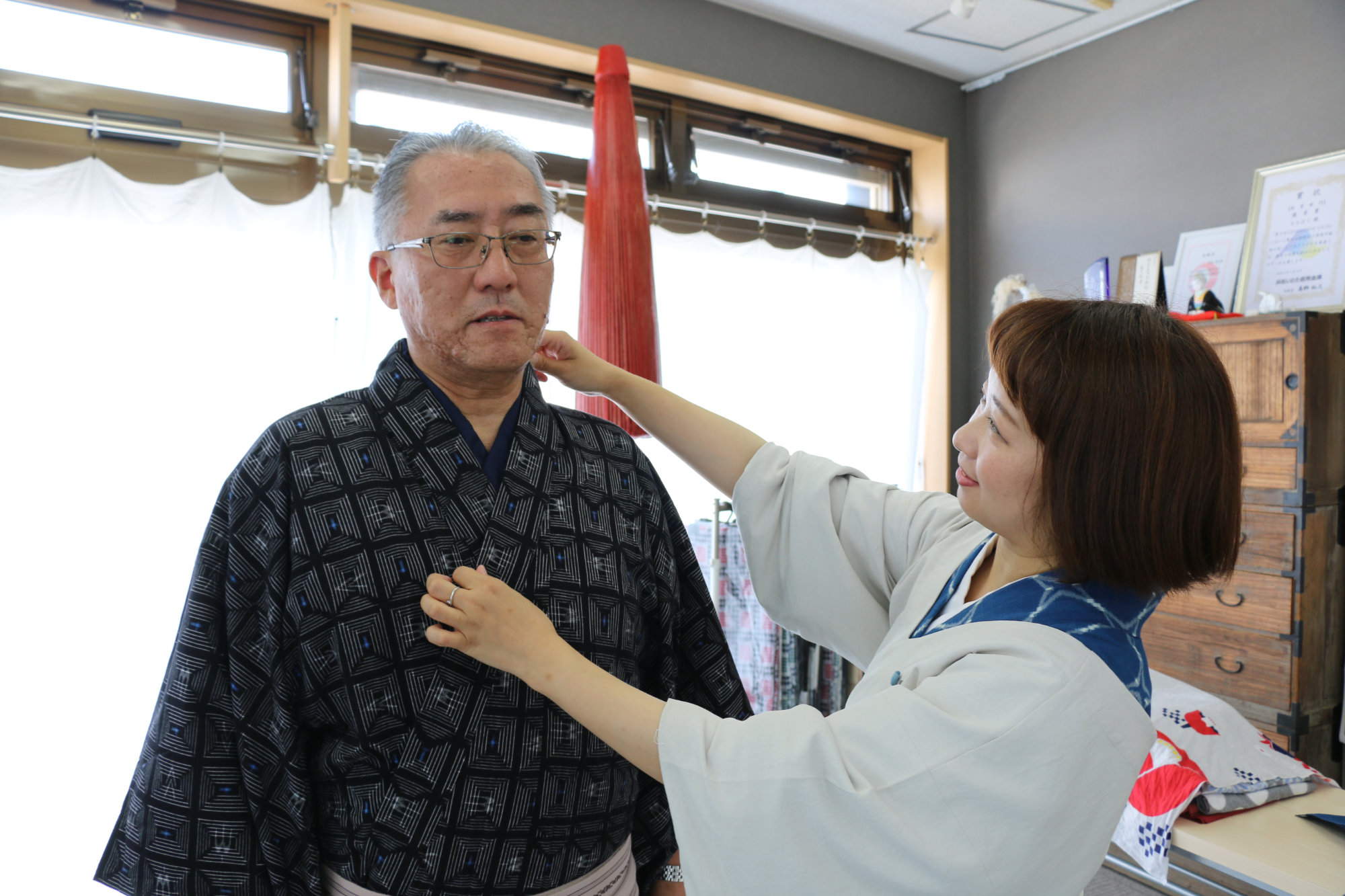
Even beginners can feel at ease thanks to Ogurabe's warm and accurate support.
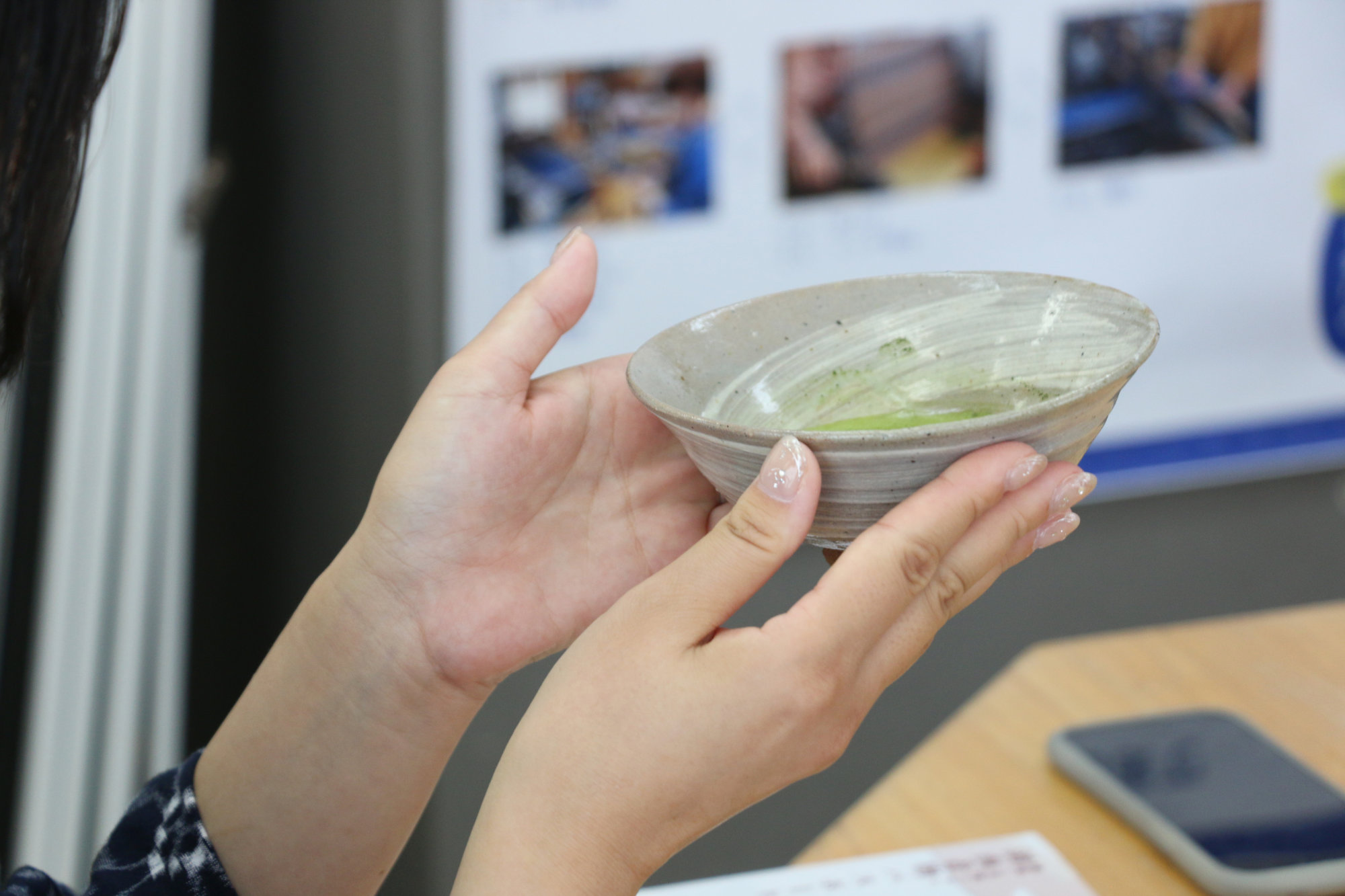
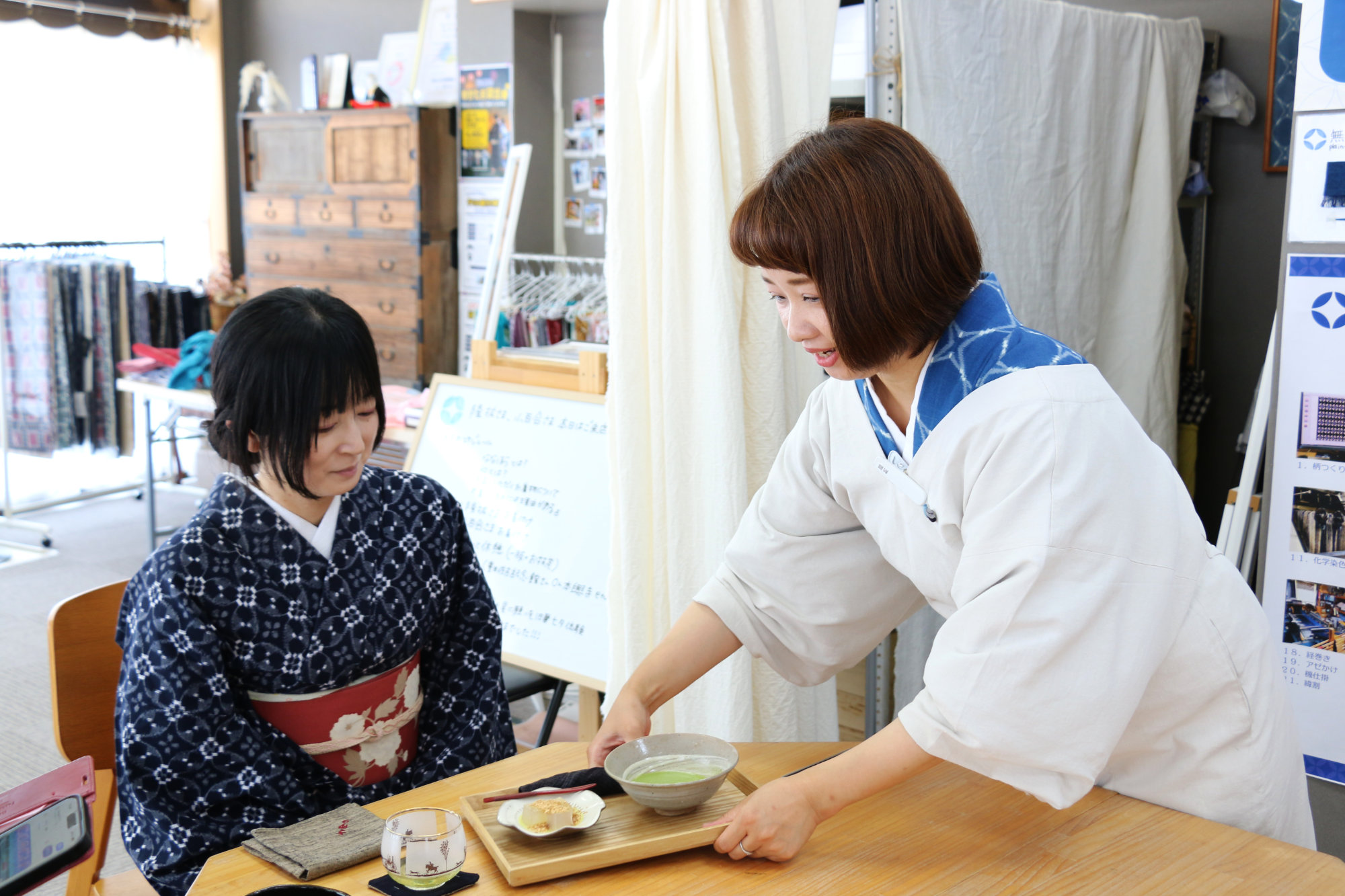
Once you've finished dressing, take a break with some local sweets and matcha tea.
Enjoying tea while thinking about Sakichi Toyoda's inventions and the history of the loom is a quiet and special experience that is different from everyday life.
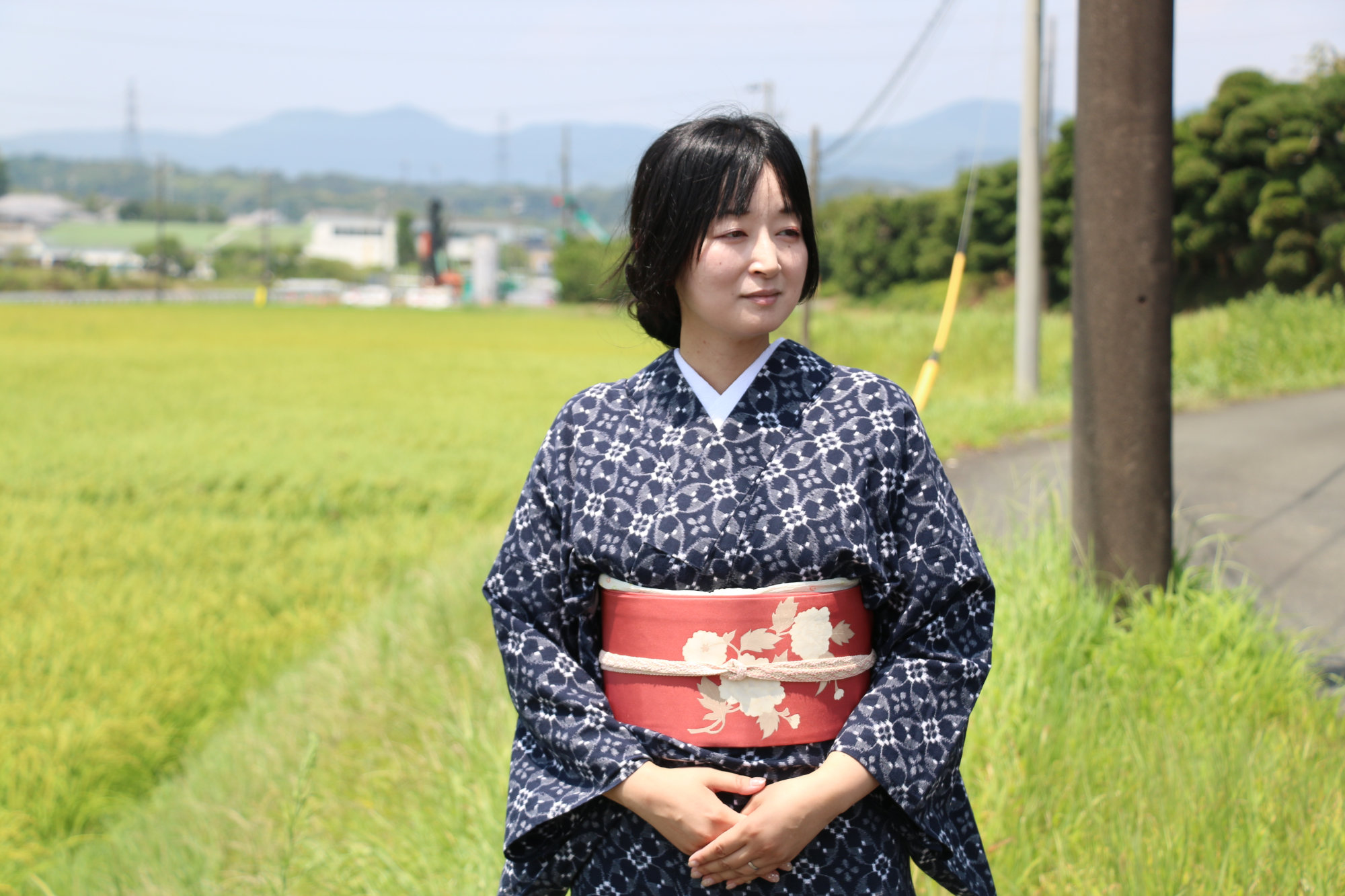
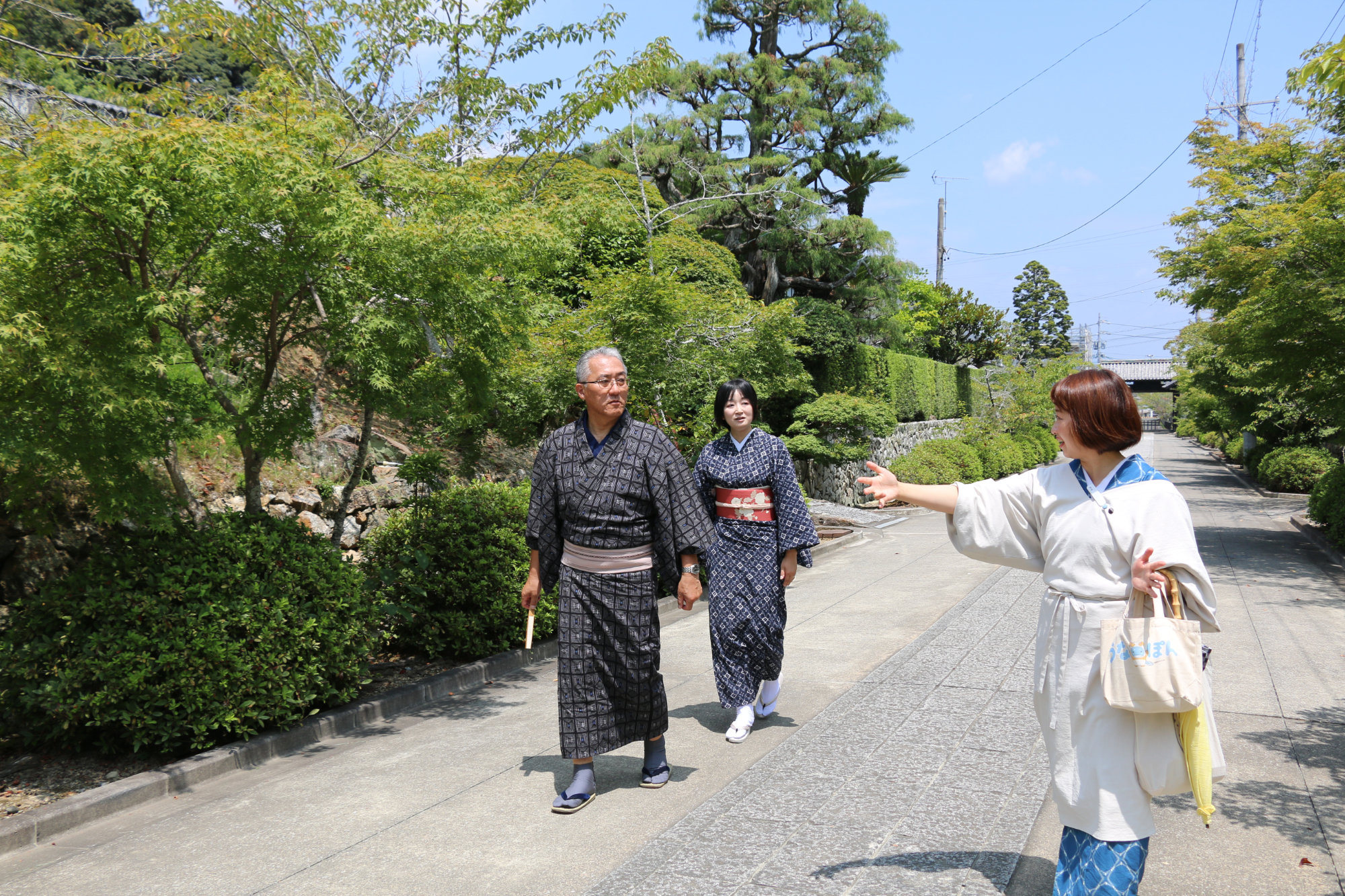

Enjoy a special experience while experiencing the city's culture
You can also tour historical spots in the west of Lake Biwa, such as the Toyoda Sakichi Memorial Museum and Honkoji Temple, while still wearing your kimono.
Along with the experience of wearing a kimono, you will also come into contact with the city's culture and history, creating memories of your trip that will stay deep in your heart.
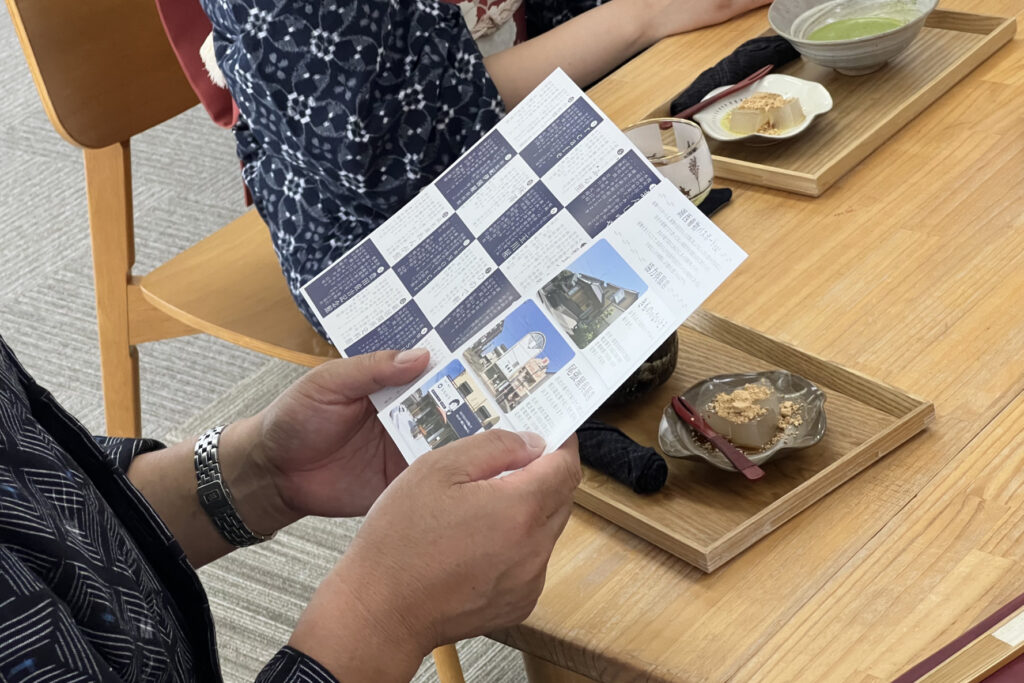
Putting on a kimono not only gives you a beautiful appearance, but also gives you time to reflect on yourself.
Experience the feel of the fabric with all five senses, enjoy the colors and patterns with your eyes, and feel the history and culture with your heart.
Spending time surrounded by the Kosai cityscape will be a spiritually enriching experience that you cannot have in your daily life.

What you can experience in this tour
The experience lasts approximately three hours. First, you will receive an explanation about the background of kimonos woven on a loom and the process of the experience while enjoying tea.
Next, we moved on to the kimono dressing experience. With careful support from Ogurabe, we put on the kimono woven on the loom and completed our own coordinated outfit using obi and accessories. We felt our backs naturally straighten as we looked different from our usual selves.
Once you're ready in your kimono, take a break with some local sweets and matcha tea. You can enjoy a relaxing Japanese experience while taking in the atmosphere of Lake Biwa.
Afterwards, you can take a tour of historical spots on Lake Biwa, such as the Toyoda Sakichi Memorial Museum and Honkoji Temple, guided by Mr. Ogurabe (no additional charge).
Those who wish can also visit shops featured in the "Kosai Kimono Passport" (food and drink costs are at your own expense). By walking around the town in a kimono, you can experience history and culture more deeply and enjoy the afterglow of your experience.
We introduce wonderful shops in Kosai City that we recommend visiting wearing a yukata or kimono. By wearing a kimono, you can start conversations with shop staff, see the usual scenery a little differently, and feel that time spent with loved ones is more fulfilling. Smiles are sure to await you when you visit in a kimono.
★On-site sales (no prior reservations required)
・ImaCoco Sakichi handkerchief 1,500 yen
・Sakichi experience badge 550 yen
★ [Put your thoughts into words with a hanging scroll]
This workshop involves writing words that are important to you on a hanging scroll made from fabric woven using an invention by Sakichi.
If you are interested, please contact us.
-
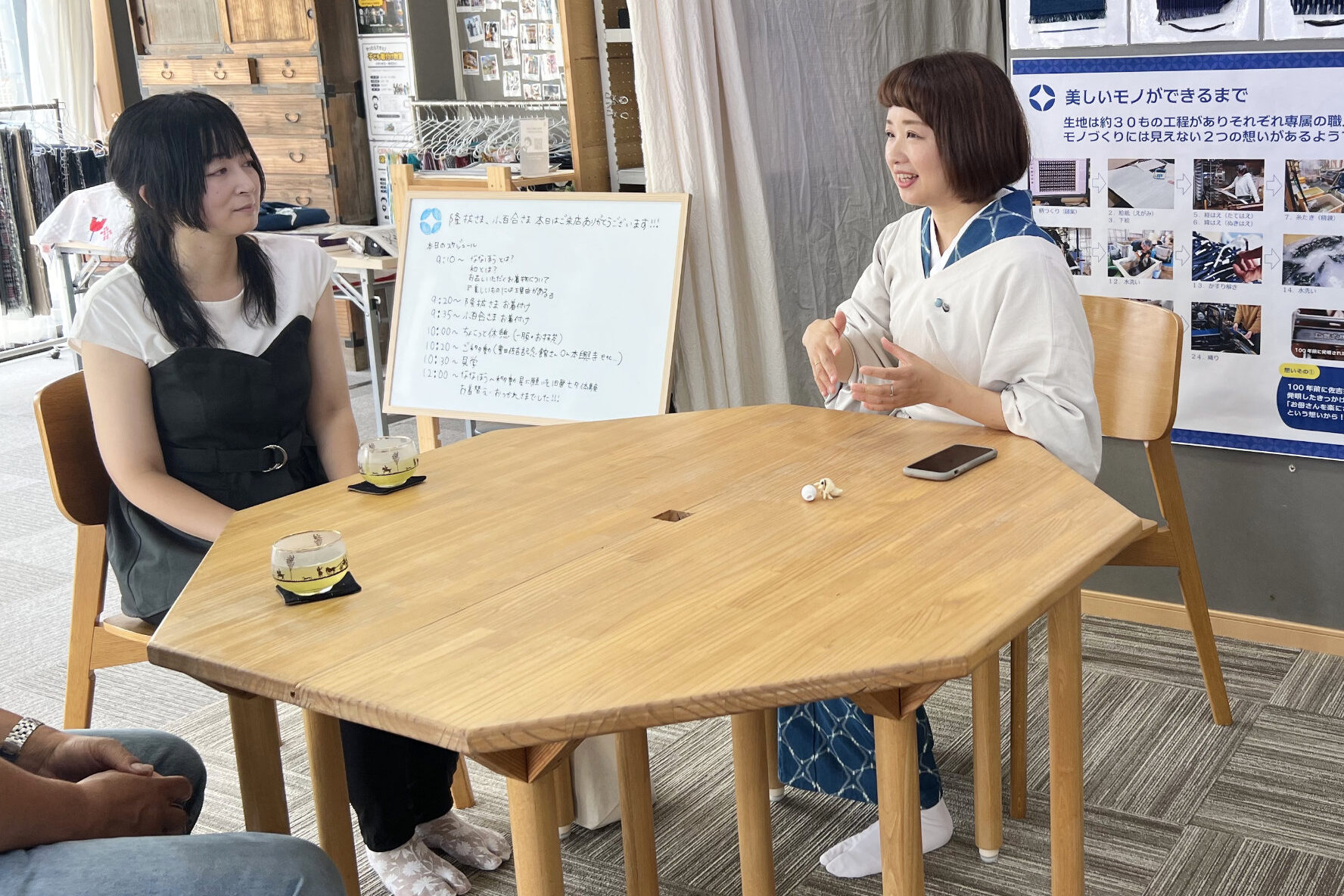
- The experience begins with tea time
-
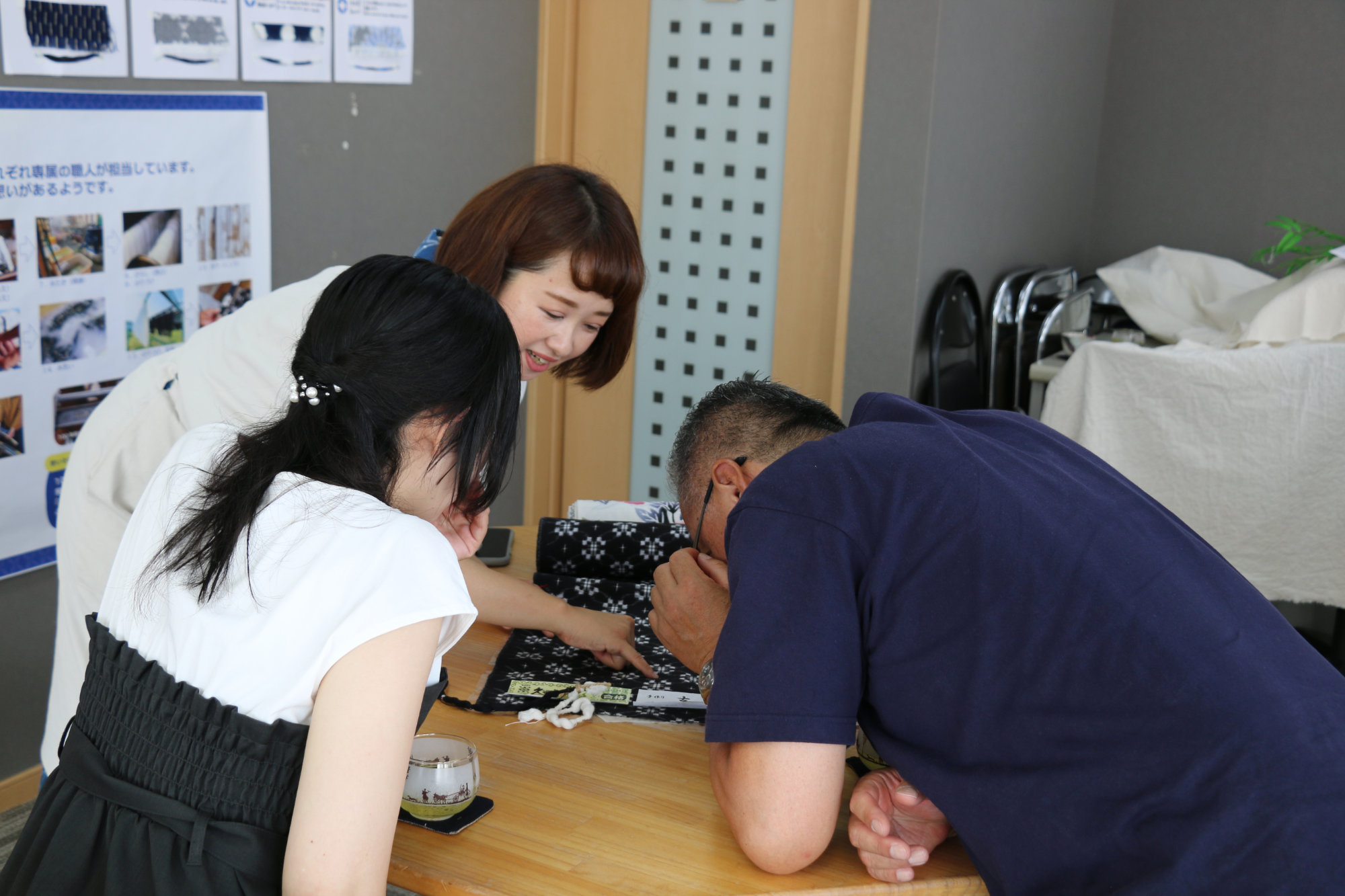
- An explanation of the history and culture of kimono woven on a loom
-
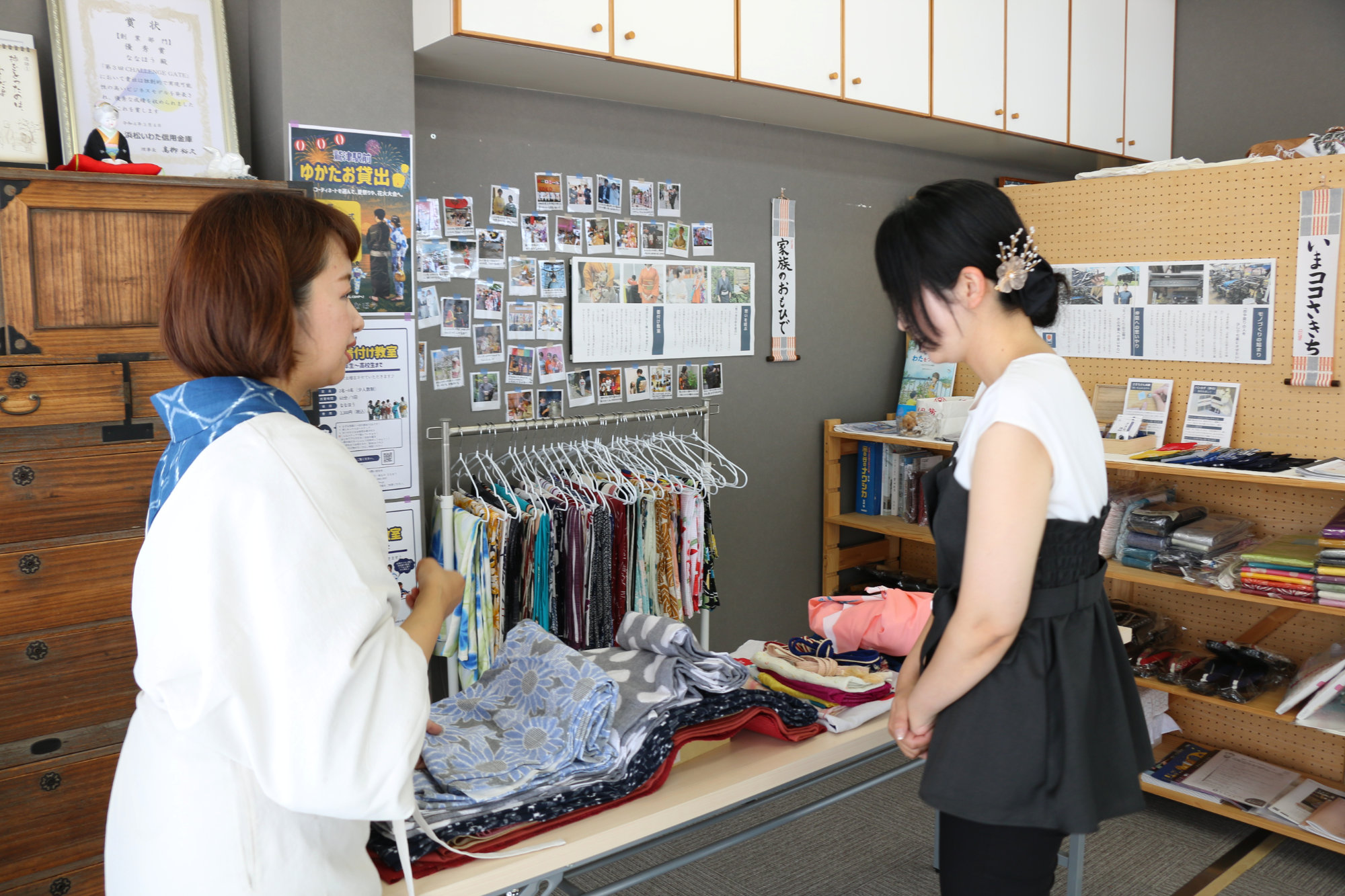
- Finding your favorite is part of the experience
-
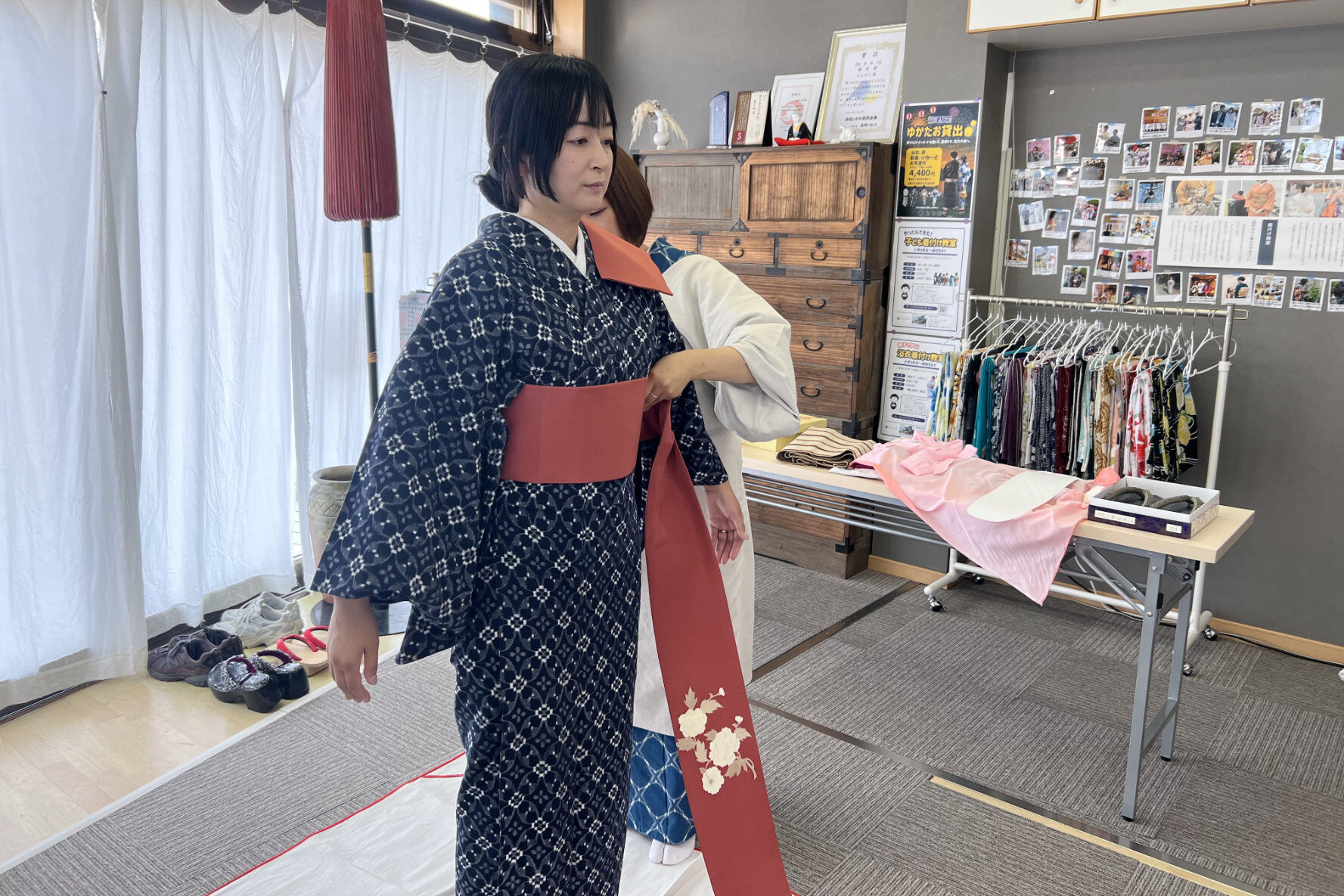
- Carefully dressing each person individually
-
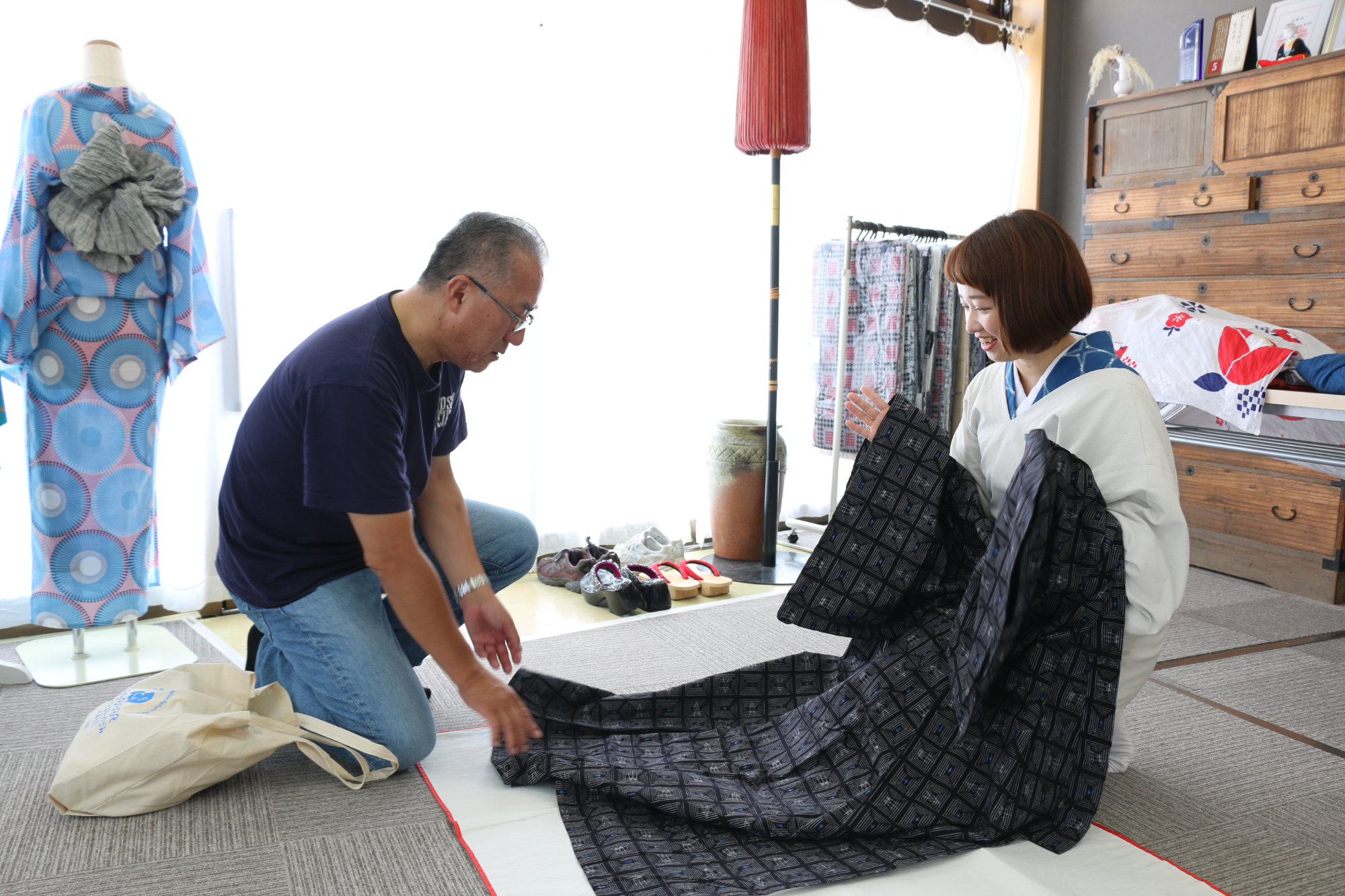
- A once-in-a-lifetime look where tradition and the present overlap
-
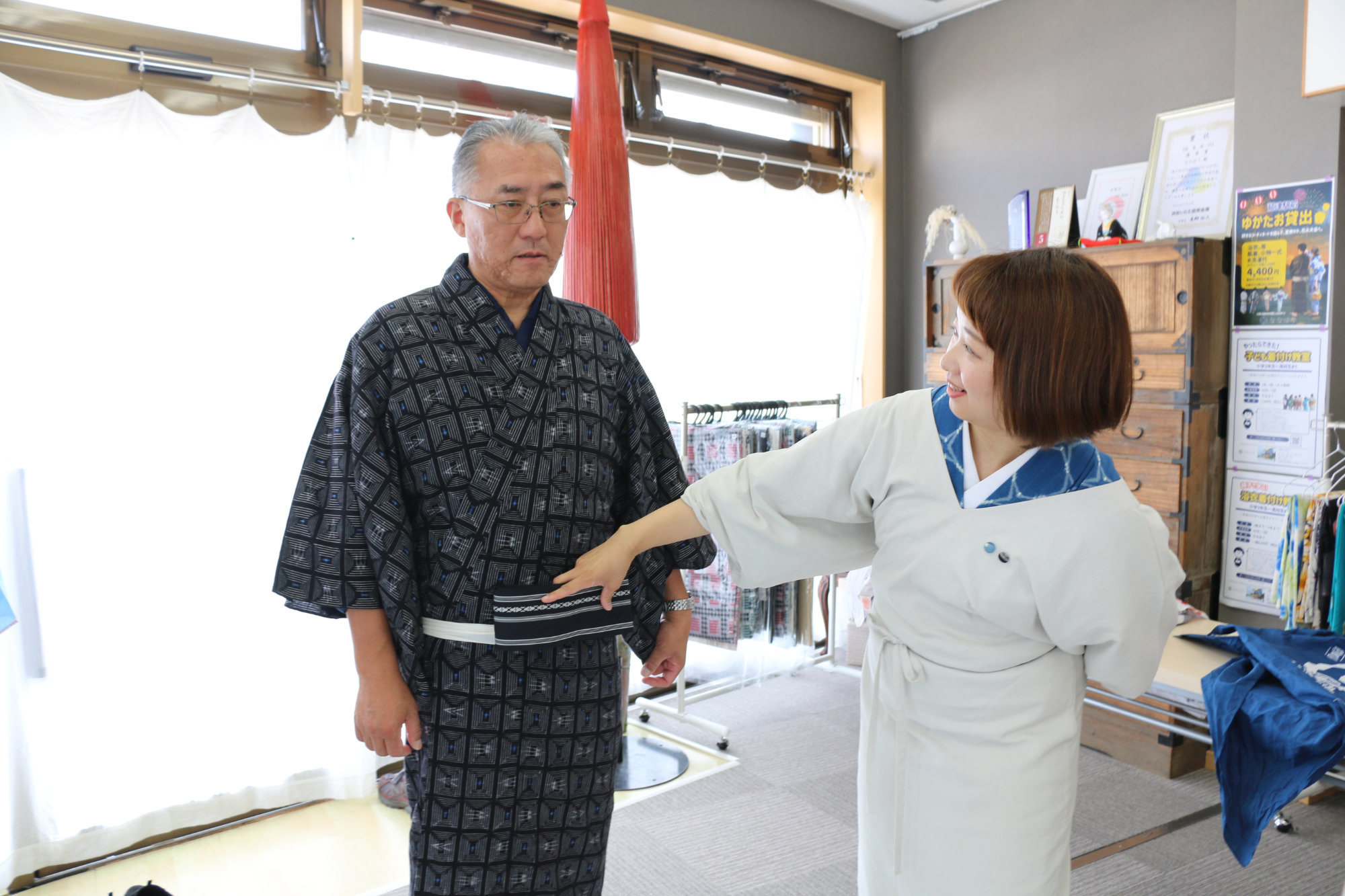
- Match with accessories to create your own unique look
-
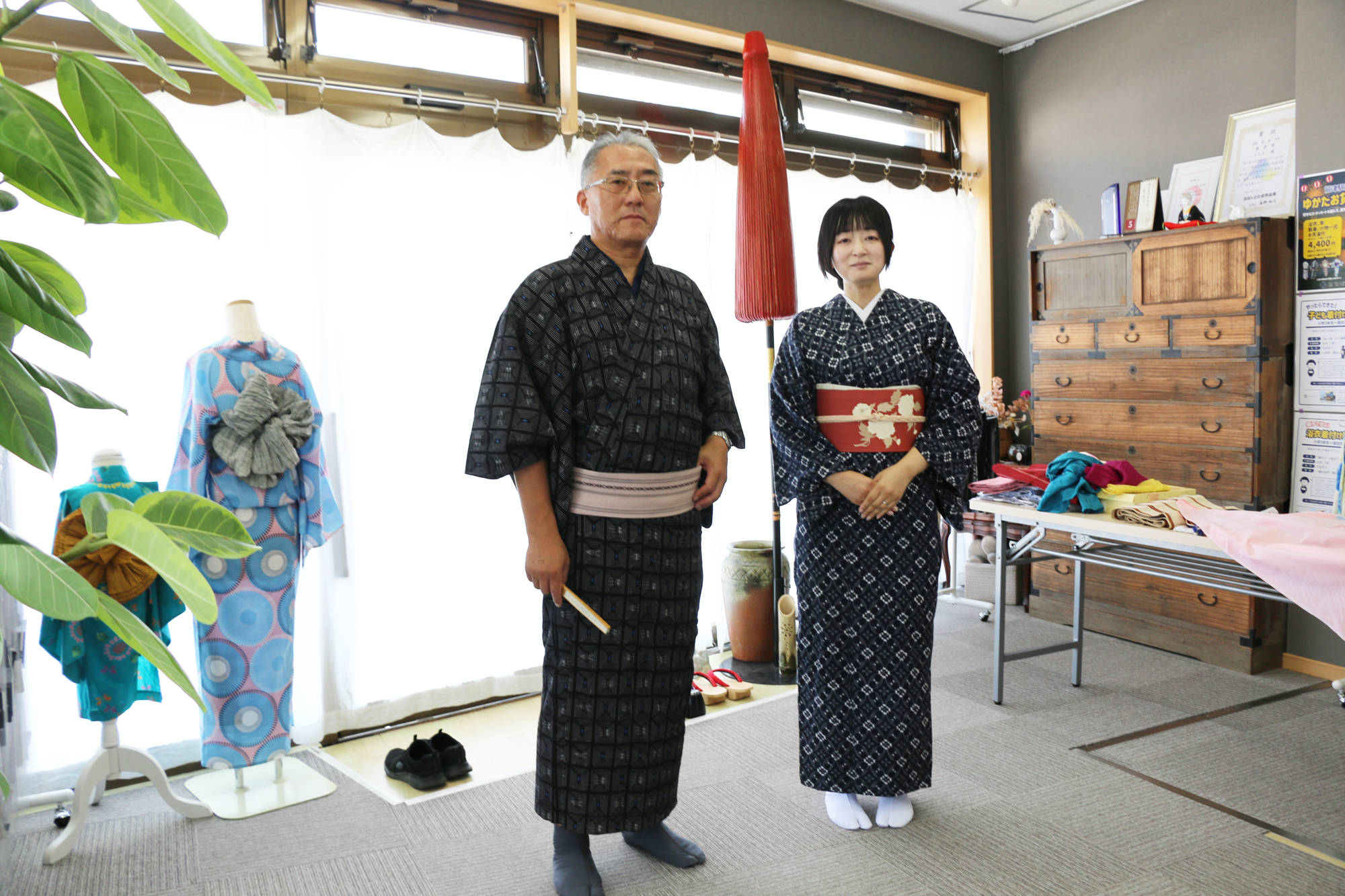
- When your outfit is in order, your heart will be dignified.
-
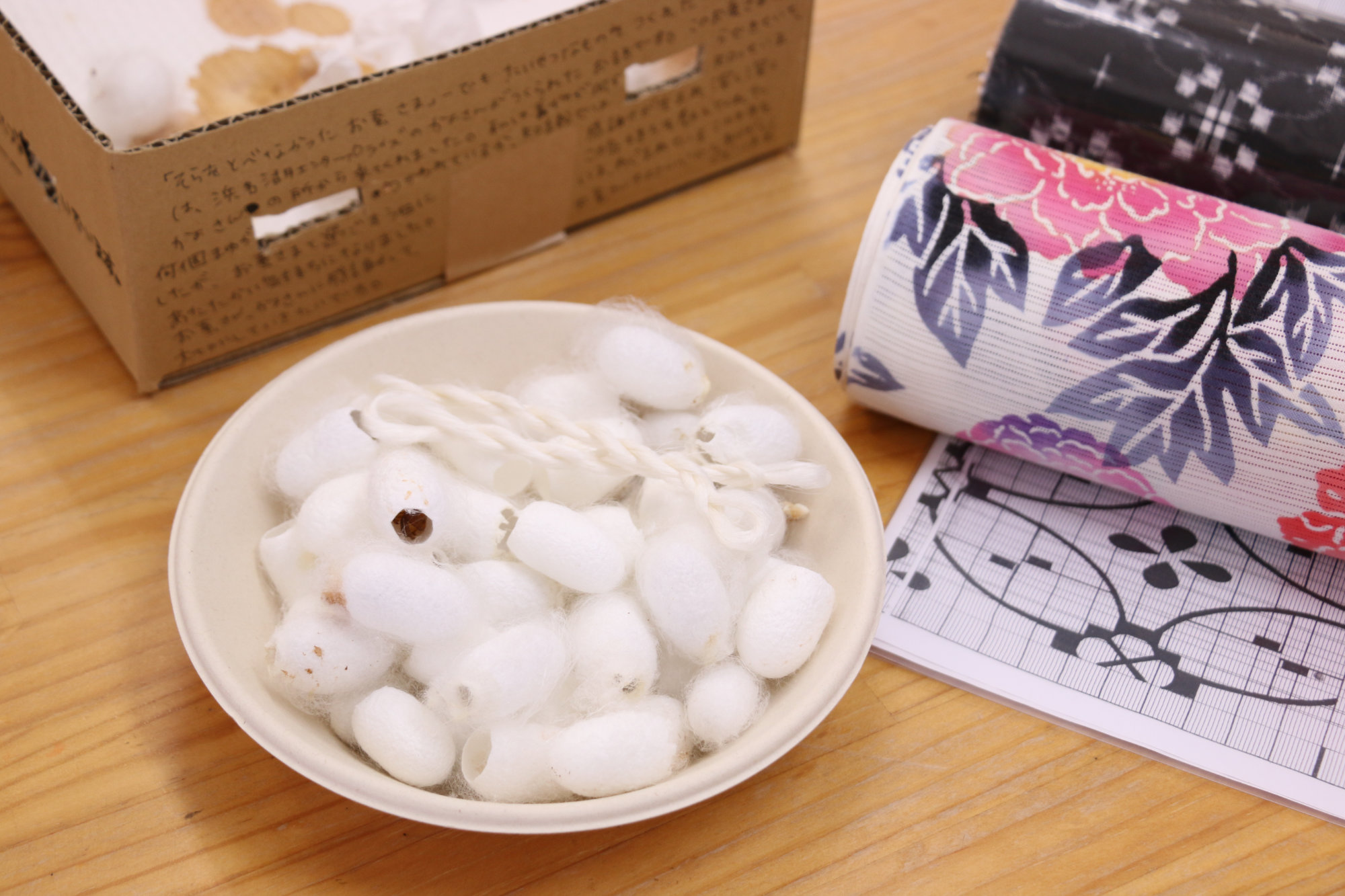
- Silkworms are raised in the store, and you can see the moment silk is born.
-
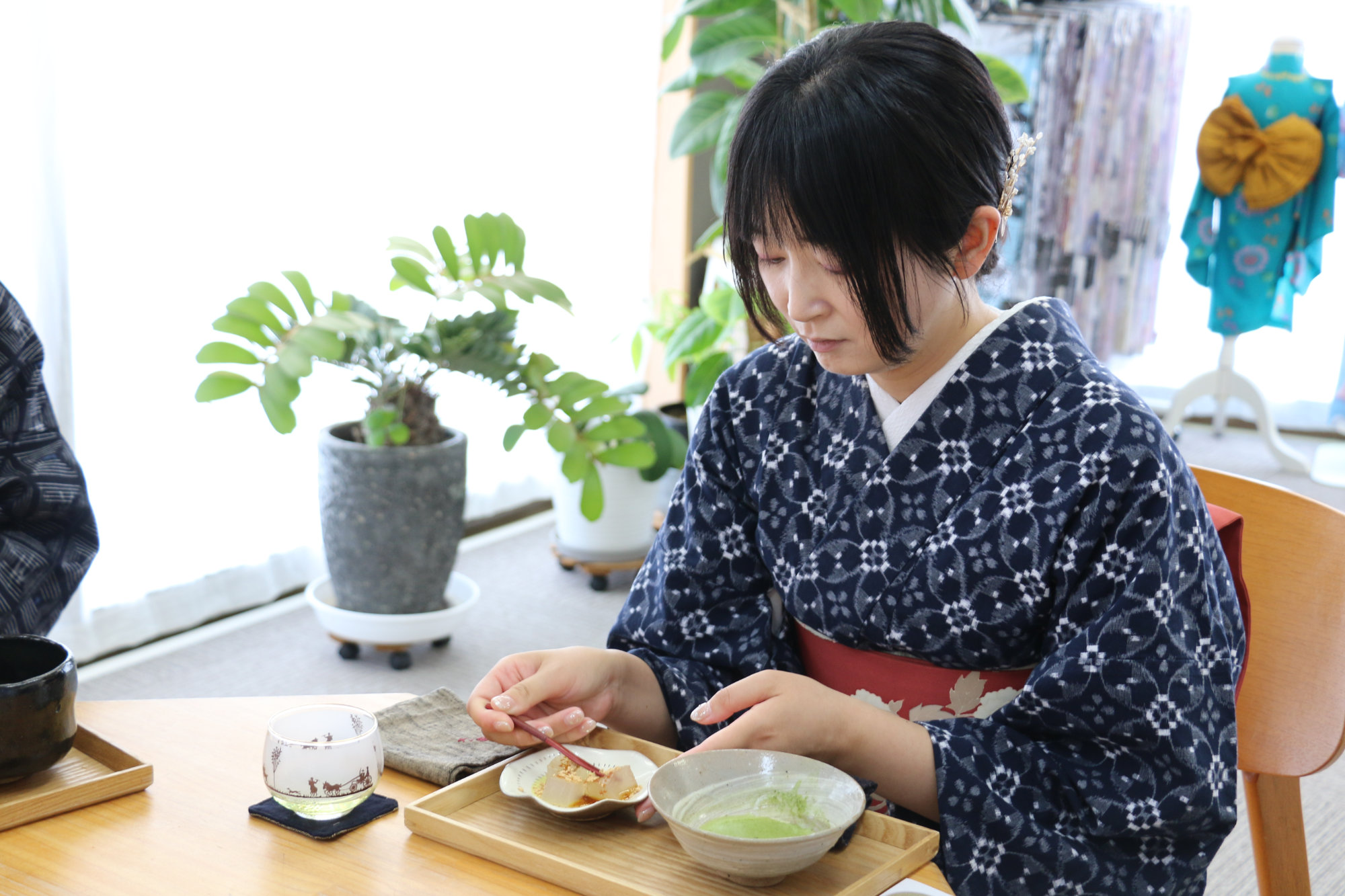
- Time to enjoy local sweets and matcha
-
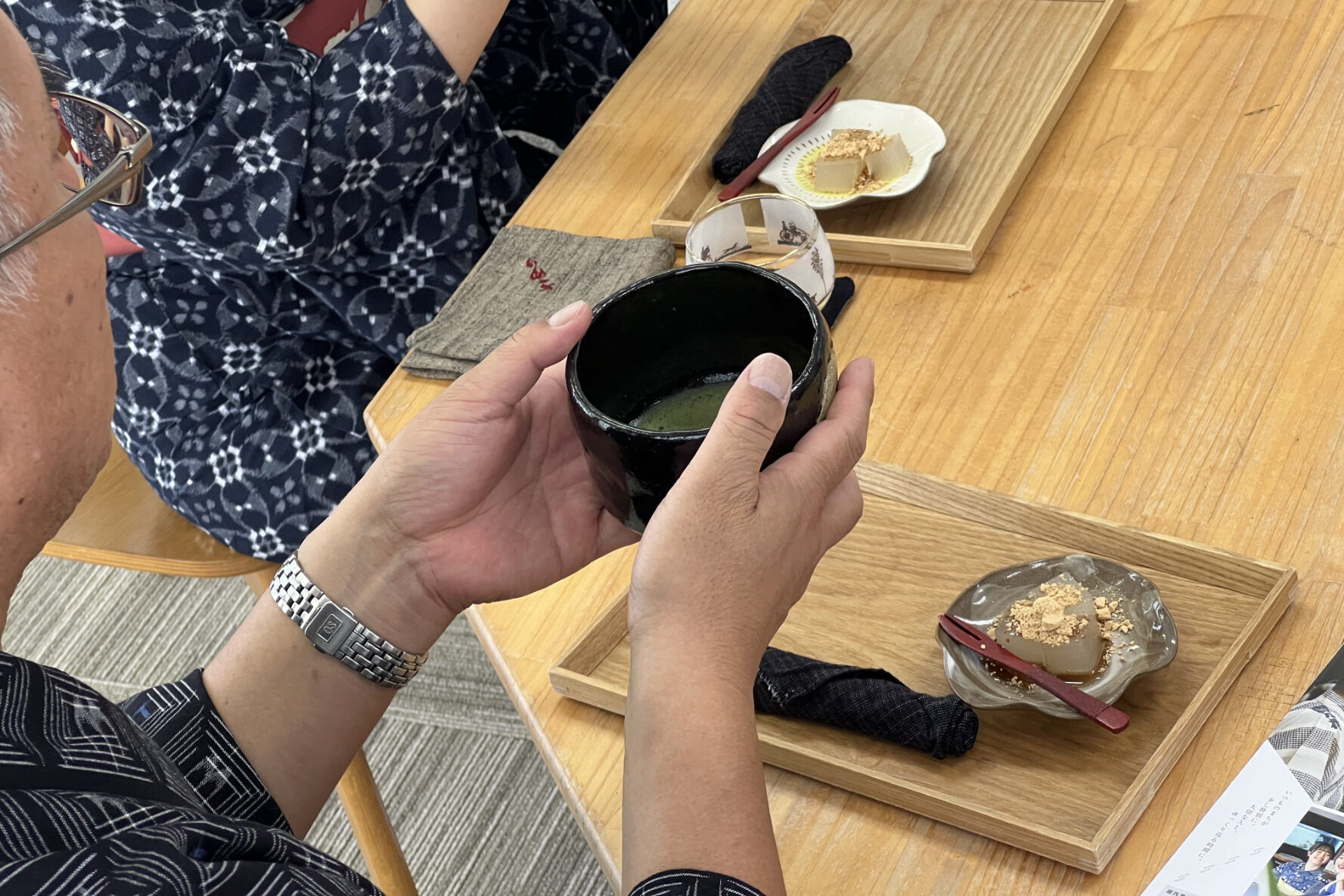
- Experience the culture of Kosai
-
- Visit historical spots in your kimono
-
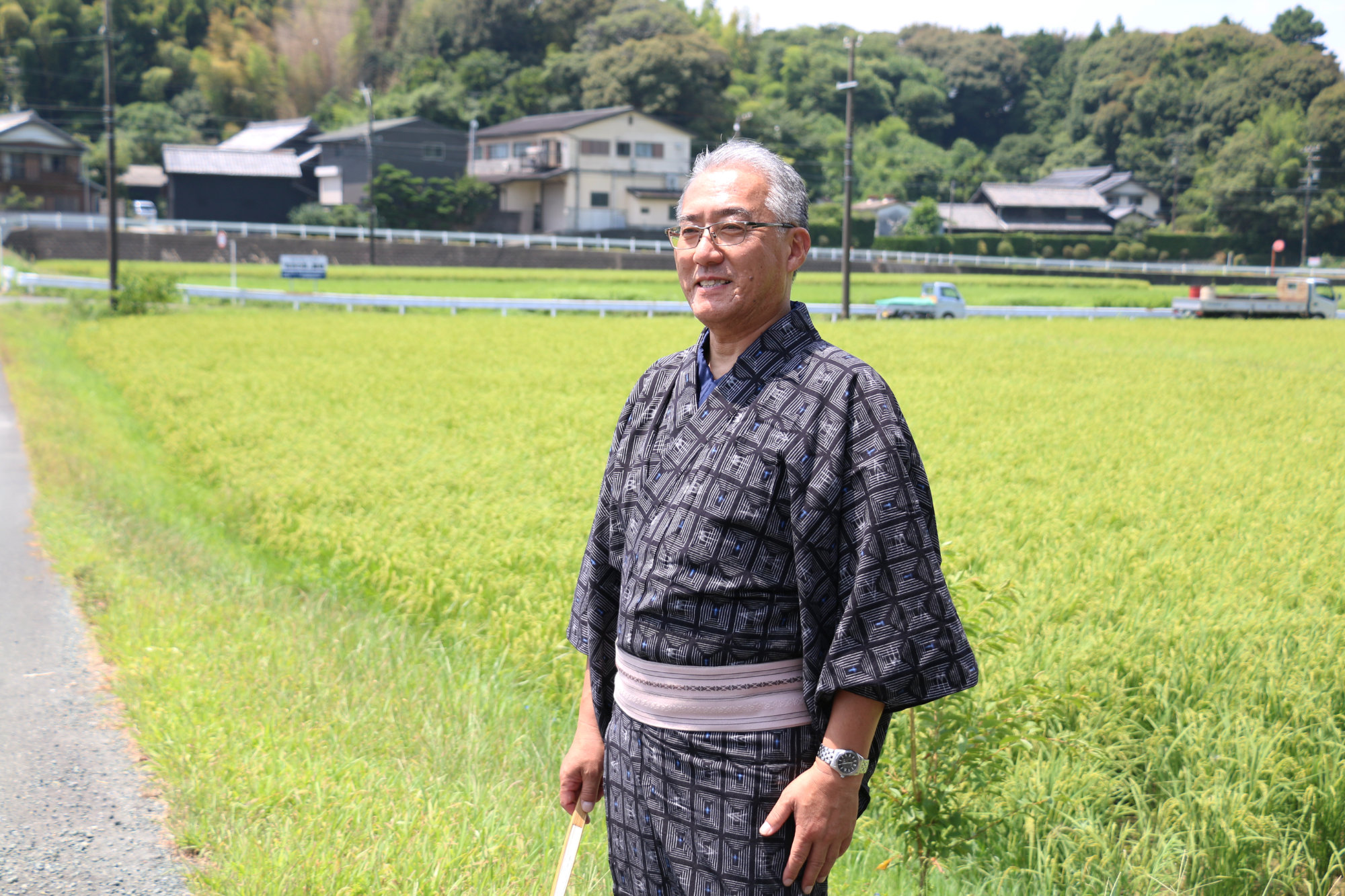
- It's a special moment blending into the cityscape.
-
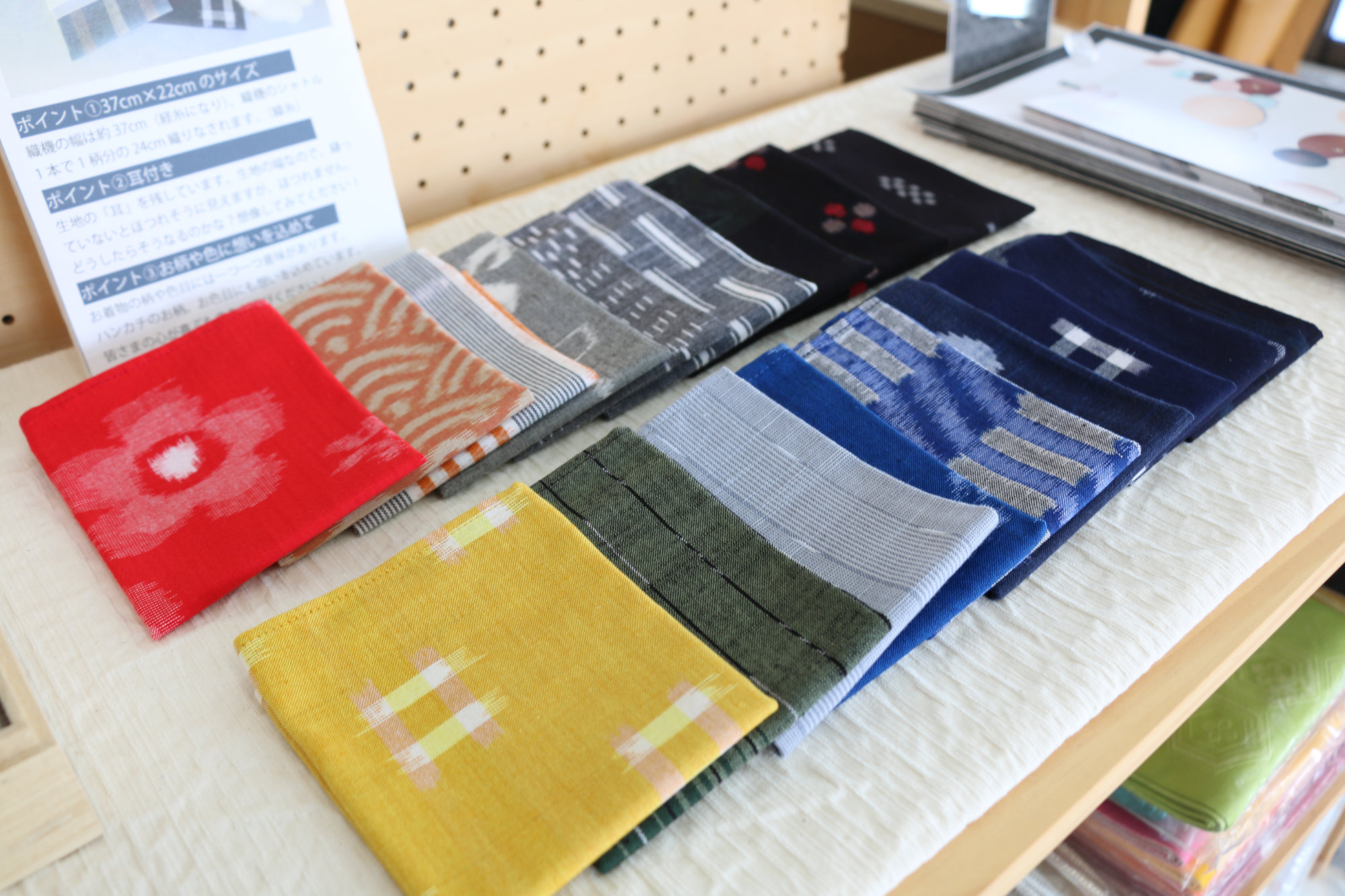
- Selling everything from kimonos to everyday handkerchiefs
-
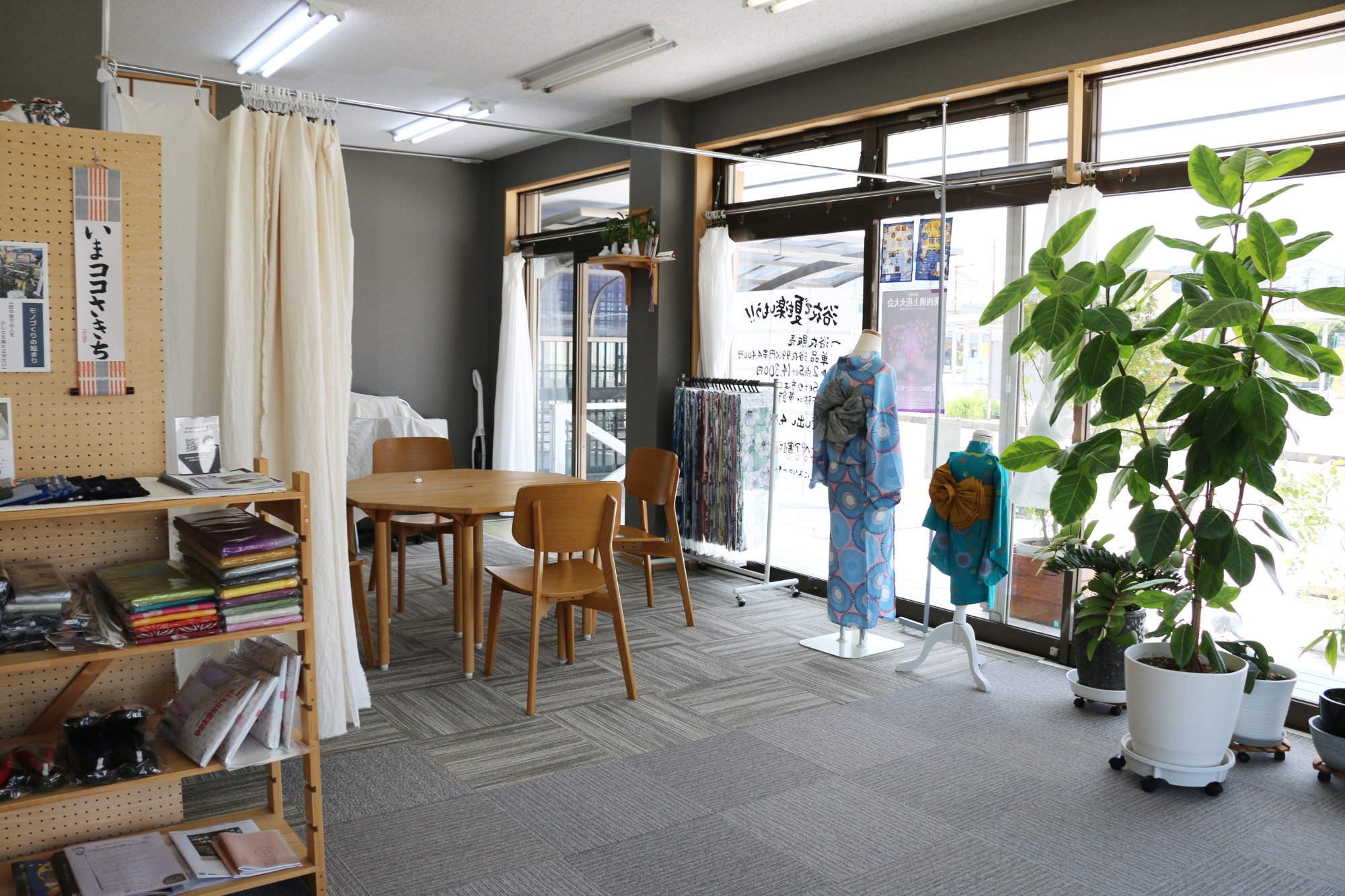
- A comfortable kimono experience in a calm atmosphere
View this post on Instagram
Guide introduction
Nanahou Co., Ltd. Representative Director, Yumiho Ogabe
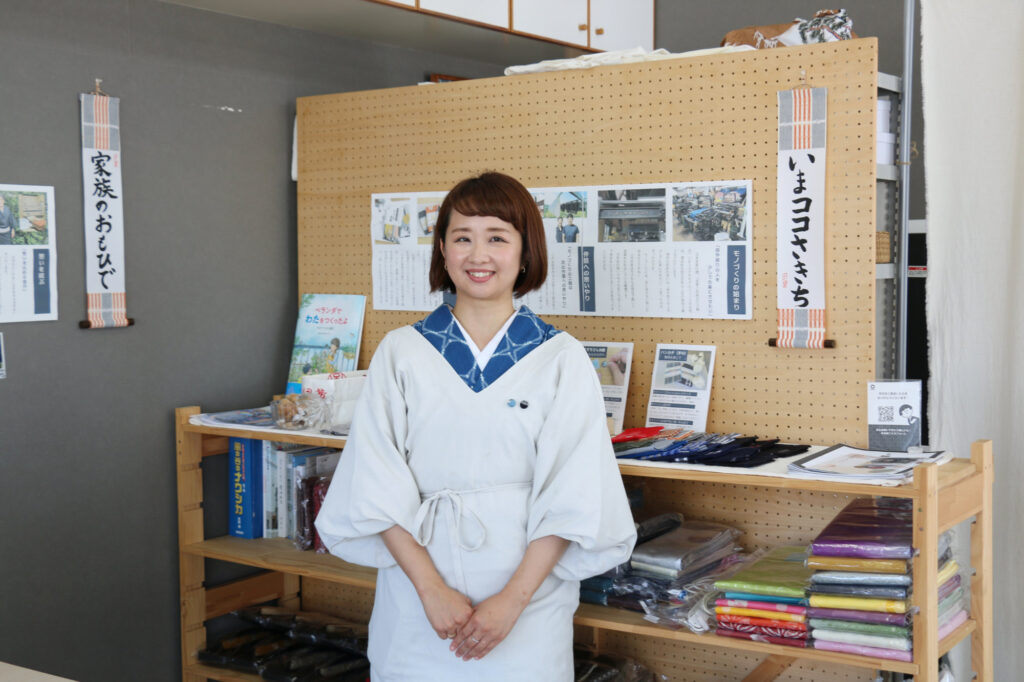
Originally from Kosai City, Nanaho was inspired by childhood memories of her grandmother dressing her in kimonos, and began learning how to wear them after entering the workforce. She trained at kimono shops in Hamamatsu and Kurume, and after encountering a loom created by Sakichi Toyoda in Kurume, she founded Nanaho as a place to share the culture of her hometown, Kosai. Nanaho offers kimono experiences that bring harmony to the mind and body, and allow visitors to experience the history of the region and the spirit of its ancestors. Nanaho also offers kimono dressing classes and workshops for children, as well as the Kosai Kimono Passport, a community collaboration project, and serves as a base for spreading the appeal of Kosai.
Access Map
Recommended ExperienceRecommended Experiences
-
 CultureNatureApril 24th (Sat) Once a month, a night museum for adults.
Night Museum is limited to high school students and above.
In addition to access to the permanent exhibition, we offer a variety of different content each month... -
 ActivityCultureNature[October 24th (Sat) Only | Meet world-famous mermaid "Lalah" on a deserted island!] Let's sow seagrass seeds from a boat! A nature experience that nurtures the future of Lake Hamana.
A special day to meet a mermaid on an uninhabited island in Lake Hamana! Enjoy an encounter with world-famous mermaid "Lalah" from a boat...
-
 ActivityCultureNatureKunma Bus Tour: A Journey Through Sound, Flowers, and Food | Held on Sunday, October 25th
This is a one-day bus tour of the Kuma district in Tenryu Ward, Hamamatsu City, where you can enjoy the local history, culture, music, and food. In addition to visiting museums and local landmarks, ...